
A suction shower handle for seniors can offer temporary balance support on smooth, non-porous tile or fiberglass, but it should not bear body weight or prevent a fall. For dependable support, choose a steel grab bar anchored into wall studs.
A handle that is easy to move can be useful when traveling or living in a rental. A suction-mounted option may suit someone who needs only light help steadying themselves, but it is not a substitute for a fixed grab bar when they lean heavily or have a higher risk of falling.
This guide compares suction handles with fixed grab bars, explains which surfaces and support needs suit each option, and covers practical bathroom safety choices. Learn when a portable handle may help, when a securely installed bar is more appropriate, and how to choose based on the user’s needs.
Key Takeaways
- Use suction-mounted handles only as light balance aids on smooth, non-porous surfaces, not to support body weight or stop a fall.
- Choose a securely anchored grab bar when dependable support is needed, and consider how its placement and visible contrast affect everyday use.
- Learn what a suction handle’s holding indicators can and can’t tell you before relying on it in the bathroom.
- For travel or rental housing, weigh the convenience of a removable handle against the user’s support needs and the bathroom surface.
- Explore Motion Nest’s Bathroom Handrail With Vacuum Sucker For Safety Support as a portable option for situations that call for light balance assistance.
Are suction-cup grab bars safe for seniors?
A suction shower handle for seniors can help with balance, but it is not dependable support for bearing body weight or preventing a fall. The Centers for Disease Control and Prevention says falls are especially dangerous for people aged 65 years or older and people with physical disabilities. Match the support to the person’s balance, strength, and bathroom layout.
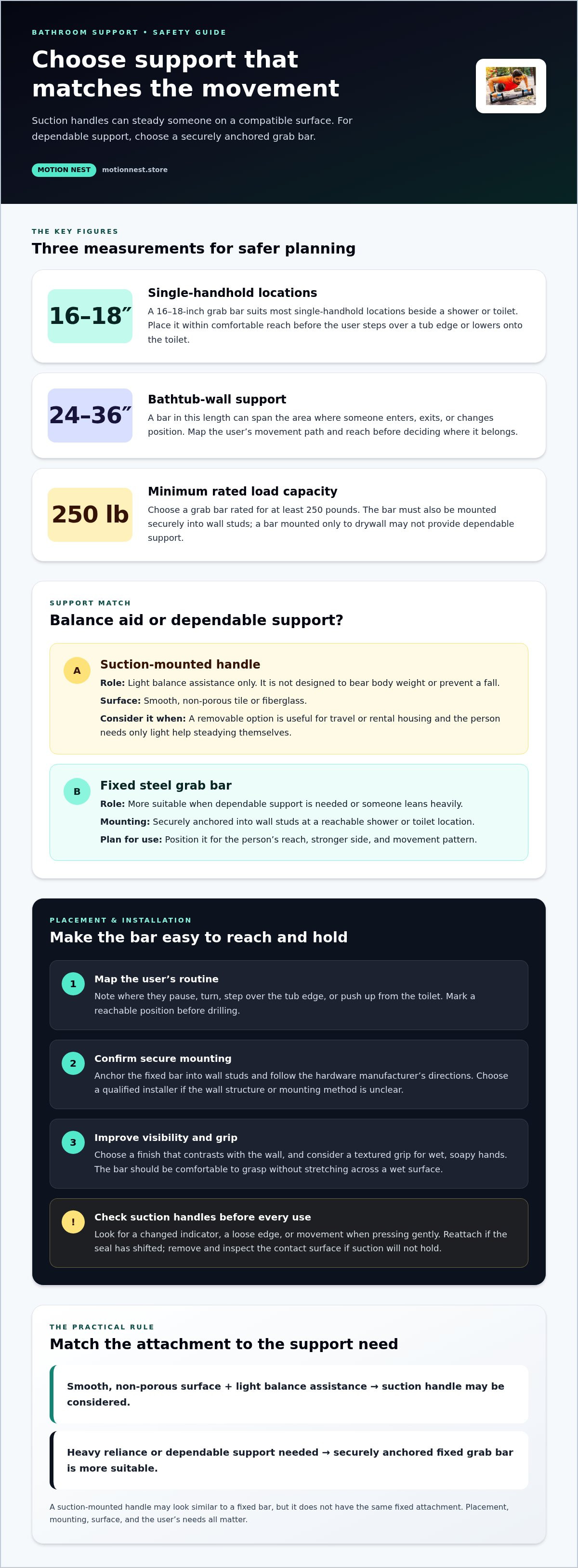
Placement matters for both showers and toilets. A 16-18-inch grab bar suits most single-handhold locations beside a shower or toilet. Position the bar where the user can reach it before stepping over a tub edge or lowering onto the toilet. A handle placed beyond a comfortable reach can encourage twisting or leaning, which makes it less useful during the movement it should assist.
In a shower, place support within easy reach for entering, standing, or turning. Beside a toilet, position a bar where a seated person can grasp it while sitting down or standing up. The best location depends on the user’s reach, stronger side, and movement pattern. A physical therapist can help assess those movements in the bathroom.
ADA-related grab-bar design criteria involve more than length. Consider the grip shape, reachable placement, clear space around the bar, and secure mounting. A suction-mounted handle may look similar, but it does not have the same fixed attachment. Use ADA-style design as a reminder to assess placement and support, not as proof that a suction device meets accessibility requirements.
Medicare or insurance coverage for suction handles is not automatic. It depends on plan terms and how the bathroom aid is classified, so do not assume a purchase will be reimbursed.
Suction shower grab bars come in different designs and materials, so there is no single price. Focus first on whether the handle suits the user’s support needs.
Suction handles are designed to help steady a person, not to bear body weight or prevent a fall. If someone leans heavily on a bar, a fixed grab bar anchored into the wall is more suitable.
| Option | Best suited for | Surface or placement | Support role |
|---|---|---|---|
| Suction handle | Light balance assistance | Smooth, non-porous tile or fiberglass | Steadying aid only |
| Fixed grab bar | Dependable support | Securely anchored at a reachable shower or toilet location | More suitable for firm support |
Choose a suction handle only for light balance support on a compatible surface. For dependable support, choose a securely anchored bar.
Grab-bar installation and safety
A fixed grab bar only helps when its placement and attachment match the user’s movements. For a bathtub wall, a 24-36-inch bar can span the area where someone enters, exits, or changes position. Beside a toilet, place support within comfortable reach from both sitting and standing. The best location depends on which hand the user can grasp the bar with and how they move.
Before drilling, map the user’s routine. Note where they pause, turn, step over the tub edge, or push up from the toilet. Mark a reachable position, then confirm the bar can be anchored securely into wall studs. A bar mounted only to drywall may not provide dependable support. Follow the hardware manufacturer’s installation directions, and choose a qualified installer if the wall structure or mounting method is unclear.
Choose a finish that contrasts with the wall so the bar is easier to locate, especially among similar-colored tile and fixtures. A textured grip can also help wet, soapy hands hold on. The bar should feel comfortable to grasp and sit where the user can reach it without stretching across a wet surface.
- For a bathtub wall: Consider a 24-36-inch bar positioned along the user’s entry or movement path.
- For a toilet: Place support where the user can grasp it while sitting and standing.
- For load capacity: Choose a grab bar rated for at least 250 pounds.
- For visibility: Select a finish that contrasts with the surrounding wall.
A clamp-on bathtub safety rail is another option for the tub edge. It grips the rim rather than attaching to the wall, so its fit depends on the tub’s shape and construction. Check that the clamp sits firmly and follow the manufacturer’s fitting instructions. A clamp-on rail rated for full support may suit someone who leans heavily, while suction-mounted aids are for balance assistance. The two mounting styles are not interchangeable.
Check a suction-cup bar before every use. Look for a changed indicator, a loose edge, or movement when you press the handle gently; reattach it if the seal has shifted. Remove it and inspect the contact surface if suction won’t hold. For a removable option, compare the bathroom handrail with vacuum support with the user’s needs, and keep fixed support in mind for heavier reliance.
What are the best grab bars for elderly parents who need real support?
For dependable support, choose a wall-mounted steel grab bar anchored into studs. Suction handles are for light balance assistance; the surface, mounting method, and user’s support needs determine the safer fit.
Suction-Mounted Handle Risks
A suction-mounted handle attaches to a smooth surface and can help someone steady themselves. It is not designed to bear full or partial body weight, prevent a fall, or replace a securely anchored bar. Its seal may weaken on an unsuitable surface or if the handle shifts. Treat it as a balance aid, not the main support for someone who leans heavily.
Wall-Mounted Grab-Bar Alternatives
A wall-mounted steel bar anchored into studs is the stronger choice for full-weight support. A clamp-on bathtub rail may help at the tub edge if it fits securely and is rated for full support. Unlike a suction handle, it grips the tub rim, and its support depends on correct fit. A shower bench or stool can reduce the need to stand while bathing, but it does not replace a handhold.
Rated Suction Handles for Seniors
For a senior in the US who needs light balance assistance, compare suction handles by intended use, surface compatibility, and support limits. A high user rating does not show that a handle can bear body weight. Choose a model intended for steadying, follow its mounting instructions, and use its holding indicators as directed. If someone needs to pull up or brace their weight, choose a steel bar anchored into studs instead.
Compatible Shower Wall Surfaces
Suction handles need a smooth, non-porous surface, such as smooth tile or fiberglass. Textured tile, stone, grout lines, and uneven areas can prevent the cups from sealing evenly. Place both cups fully on a flat section, away from seams and edges. Drilled steel grab bars are better suited to textured or stone bathroom surfaces.
Choose support based on what the person actually needs. If your parent needs only a light touch for balance on smooth tile, a suction handle may suit that limited role. If they pull, push, or lean firmly, choose a steel grab bar anchored into studs or a properly rated clamp-on rail that fits the bathtub. Do not rely on a suction handle for fall protection.
Testing suction grab-bar holding capacity and reliability
A suction handle’s indicator can show whether its cups appear attached, but it does not prove the handle can bear body weight. Treat it as a balance aid, not load-tested support. A gentle hand check may reveal movement before use, but never test it by hanging from it, leaning heavily, or asking someone to pull against it. The handle could release suddenly, causing a fall.
Follow the manufacturer’s fitting steps every time you attach a removable handle. First inspect the cups and contact area for dirt, damage, moisture, or residue. Clean the surface as directed, then place both cups fully against a smooth, flat section. Avoid grout lines, seams, cracks, and textured patches, which can interfere with the seal. Lock the mechanism and check any indicator before use.
- Confirm the surface is smooth, clean, and dry.
- Position every suction cup flat against the surface.
- Engage the locking mechanism according to its instructions.
- Press the handle gently and watch for movement or a changed indicator.
- Remove and reattach it if any edge lifts or the handle shifts.
Repeat the gentle check before each use, and reattach the handle if its indicator changes or the seal moves. Inspect it after cleaning the shower or moving the handle, too. Temperature changes, soap residue, and water can affect the contact area. A successful check confirms only that the handle feels attached at that moment. It does not make a suction model equivalent to a fixed grab bar.
Length and rated capacity matter when comparing fixed bars. A 24-36-inch grab bar can span a bathtub wall, while a bar rated for at least 250 pounds is the stated minimum capacity in this guide. Those figures apply to selecting a grab bar, not to estimating suction strength. A capacity label also doesn’t make an improperly mounted bar safe. Secure anchoring and correct placement remain essential.
For full-weight support, use a wall-mounted steel bar anchored into studs. A suction handle is meant only to help someone maintain balance, not to bear full or partial body weight or prevent a fall. If the user needs to pull up from a seat or brace against the wall, do not use a suction-handle test to judge whether it can take that force. Choose support designed for the task.
Keep the bathroom setup practical: position the fixed bar where the user can reach it while entering, standing, or turning, then inspect its attachment and grip. Pairing a grab bar with a bath bench or shower stool lets someone sit while bathing, reducing the need to stand while keeping a handhold available during transfers.
When a suction handle may be considered for travel or rental housing
A removable suction handle can be practical for travel or rental housing when someone needs light balance assistance and the bathroom has a suitable surface. It avoids drilling and moves with the user, but cannot replace dependable support for someone who leans heavily. Decide based on the person’s needs, the wall surface, and how the handle will be used.
Before using a handle in a hotel, vacation rental, or temporary home, inspect the shower wall. Smooth, non-porous tile or fiberglass can provide the surface a suction cup needs. Textured tile, stone, grout lines, and uneven sections can prevent a secure seal. Place the handle only where both cups sit flat, and follow the manufacturer’s installation and removal instructions.
For a short stay, a portable handle may help a traveler steady themselves while entering or turning in the shower. It should not be the main handhold for pulling up, bracing full body weight, or recovering from a slip. If the user needs firm support, plan around a fixed grab bar or another properly secured support instead of relying on a removable suction aid.
In the United States, the Fair Housing Act means most housing providers must allow grab bars as a reasonable modification. Renters may have to pay for the bars and installation. This distinction matters: a suction handle avoids drilling, while a fixed bar may provide more dependable support. Renters who need a permanent bar should understand that installation and payment can be part of the modification.
No-drill options include suction-mounted handles and clamp-on bathtub rails. Suction cups adhere to a smooth wall, while a clamp-on rail grips the tub edge. The rail needs a compatible tub rim and correct fitting. Neither option is interchangeable with a wall-mounted steel bar anchored into studs when full-weight support is needed.
Use this travel or rental checklist before bathing:
- Identify whether the user needs light balance help or firm weight-bearing support.
- Inspect the shower wall for smooth, flat contact areas without grout beneath the cups.
- Attach the handle according to its instructions and check for movement before use.
- Remove it as directed, then inspect the surface for residue or damage.
- Choose a fixed, securely anchored bar when the user relies on strong support.
For a portable aid suited to temporary housing, explore removable bathroom handrail options, and match the support to the user’s needs and the bathroom surface.
Motion Nest: Bathroom Handrail With Vacuum Sucker For Safety Support
Motion Nest sells the Bathroom Handrail With Vacuum Sucker For Safety Support, a removable bathroom balance aid. It may suit travel or rental housing when the user needs light assistance and the surface is smooth and non-porous. Follow the product’s fitting instructions and check its attachment before use.
This type of handle is not a substitute for a fixed grab bar when someone needs dependable, weight-bearing support. If a senior leans heavily, pulls up, or has a higher risk of falling, choose a securely anchored grab bar instead. Matching the aid to the person’s needs helps set realistic expectations.
Visit Motion Nest to explore the bathroom handrail and decide whether it fits your needs.
Take the Next Step Toward a More Confident Routine
Make the decision with the person who will use the bathroom support. Before choosing a suction shower handle for seniors, notice which parts of the routine feel least steady, such as reaching for a towel or turning to step out. This helps focus on a practical change that suits the person, not just the bathroom.
Then agree on a simple plan: identify when support is needed, choose an aid suited to those needs, and make using it part of the daily routine. A setup the person can reach and use naturally can support comfort and confidence. Revisit the plan if routines or mobility needs change.
Motion Nest offers a bathroom handrail with vacuum support for people considering a removable option. Explore Motion Nest’s bathroom support option and take the next step toward a routine that feels more comfortable.
Frequently Asked Questions
Do grab bars have to be drilled into the wall?
No. Suction-mounted handles and clamp-on bathtub rails attach without drilling, while fixed grab bars usually need secure wall anchoring. A clamp-on rail, for example, grips the tub rim, so its fit depends on the tub’s shape. In a rental, removable options can avoid permanent changes, but they do not provide the same dependable support as a properly anchored bar for someone who leans heavily.
What size shower grab bar does a senior need?
A 16-18-inch bar suits most single-handhold locations, while a 24-36-inch bar can span a bathtub wall. Choose based on the movement the person needs help with, such as stepping over the tub edge or turning near the shower. A longer bar can offer more grasping positions, but placement and secure anchoring matter as much as length.
Are suction-cup shower grab bars safe for seniors?
They can help someone maintain balance on a compatible surface, but they are not meant to bear body weight or prevent a fall. A suction shower handle for seniors is best treated as a light steadying aid, not a primary handhold. Someone who pulls hard to stand needs a securely anchored bar instead of relying on suction cups.
What is the weight limit for suction shower grab bars?
Do not use a suction handle to support body weight, even if its packaging displays a holding figure. That figure does not make it suitable for pulling up, bracing heavily, or recovering from a slip. A wall-mounted steel grab bar anchored into studs is the recommended choice for full-weight support. Check the fixed bar’s stated capacity and installation requirements before selecting it.
How do you install and test a suction shower handle?
Follow the handle’s instructions, starting with a clean, dry, smooth surface. Keep each cup clear of grout lines, seams, and uneven areas, then engage the locking mechanism. Check the indicator and press gently to spot movement before use. If an edge lifts or the handle shifts, remove and reattach it. Never test its hold by hanging from it or leaning your full weight.
What safer alternatives are there to suction grab bars, such as mounted grab bars or shower chairs?
A steel grab bar anchored into wall studs offers firmer support for someone who leans or pulls while standing. A bath bench or shower stool lets the user sit while bathing, reducing the need to stand throughout the routine. The options can work together: use the seat for bathing and a fixed bar for balance during transfers, such as getting into or out of the tub.
How much do suction shower grab bars cost?
Suction shower grab bars generally range from fifteen to forty dollars, depending on the brand, length, and indicator features. While budget-friendly, shoppers at Motion Nest should remember that price reflects balancing assistance rather than heavy-duty weight support. Premium models often include more reliable vacuum-loss indicators, but no suction model replaces the structural safety of a properly anchored permanent bar.