
A smooth shower wall matters more than a no-drill label. A temporary bathroom grab bar for renters may suit a clean, dry, smooth surface where the suction cups fit completely without crossing grout lines. Use it for balance support, not to hold your full body weight, and test its stability before each use.
It makes sense to look for support that won’t require permanent changes to a rental bathroom. But surface texture, tile size, and grout placement can all affect whether a suction bar attaches securely.
This guide explains how to assess your bathroom, choose a suitable bar, and use it carefully. You’ll also learn when a suction model may not meet your needs, so you can make an informed choice for your routine.
Key Takeaways
- Assess your bathroom’s surface and layout before choosing a removable support option.
- Compare suction-mounted support with a wall-mounted bar, which should be secured into studs rather than drywall alone.
- Under ADA section 608.3, grab bars are not required in showers in residential dwelling units if wall reinforcement allows compliant bars to be installed, according to the U.S. Access Board.
- Use the article’s practical criteria to decide whether a vacuum-suction handrail suits your rental bathroom setup.
Temporary bathroom grab bar for renters
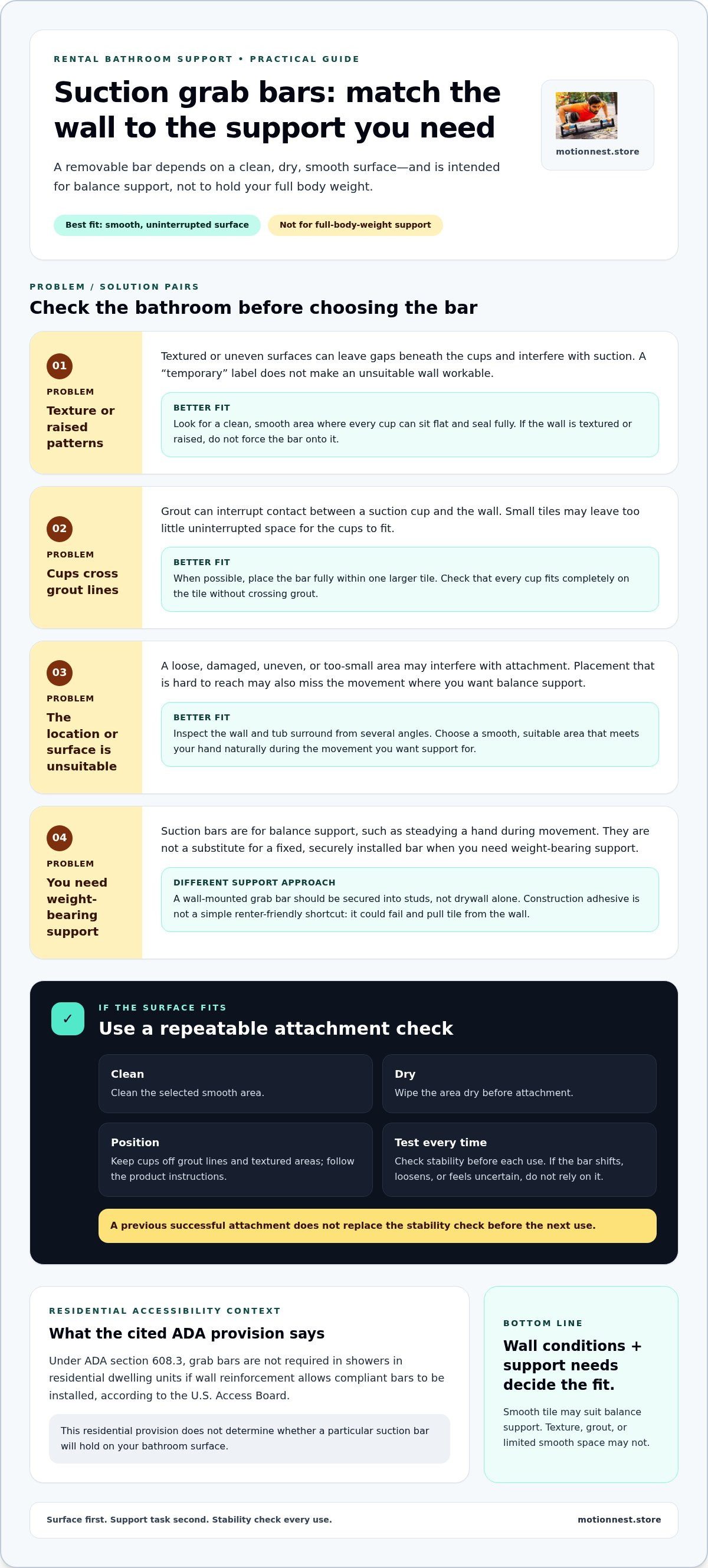
A temporary bathroom grab bar for renters can provide removable support without drilling into a bathroom wall. Suction-cup models depend on the surface as well as the bar’s design. They need clean, smooth contact areas, with each cup sitting flat and fully sealed. A textured shower surround can prevent proper attachment, while small tiles may leave too little uninterrupted space. Before choosing a model, inspect the wall where you would place it. Look for a large, smooth tile or another suitable surface without grout beneath the cups.
Tile layout matters. When possible, place the bar fully within one larger tile rather than letting a cup cross a grout line. Grout can interrupt the cup’s contact with the wall, and texture can create small gaps that interfere with suction. If your shower has narrow tiles, raised patterns, or uneven areas, a suction bar may not fit. Check the bathroom walls and tub surround from several angles before selecting a location. This quick inspection helps you compare the cup placement with the space available.
Consider the support you need. Suction bars are intended for balance support, not for holding your full body weight. They can help steady a hand during a movement, but they are not a substitute for a fixed, securely installed bar when you need weight-bearing support. A wall-mounted grab bar should be secured into studs rather than only into drywall. Construction adhesive is not a simple renter-friendly shortcut, since it could fail and pull tile from the wall.
Check the rental bathroom before choosing
Use this short inspection to judge whether a removable suction model suits your bathroom:
- Surface: Find a clean, smooth area, not a textured wall or a section with raised patterns.
- Tile: Check that the cups fit fully on a larger tile without crossing grout lines.
- Reach: Choose a position that meets your hand naturally during the movement where you want balance support.
- Condition: Look for loose, damaged, or uneven surfaces that could interfere with attachment.
These checks focus on your bathroom, not just the product label. A bar described as temporary may still be unsuitable if its cups cannot sit flat on your wall. If no smooth, uninterrupted surface fits the cups, don’t force the bar over grout or texture. Choose a different support approach suited to your needs and rental setup.
Follow a careful attachment routine. Clean the selected area, wipe it dry, and position the cups on the smooth surface. Press the bar into place according to its instructions. Test its stability before every use. If it shifts, loosens, or feels uncertain, don’t rely on it for support. Suction can fail even when a bar appears to be on a suitable surface, so repeat the stability check each time rather than assuming the previous attachment remains secure.
Housing rules also have a specific context. Under ADA section 608.3, grab bars are not required in showers in residential dwelling units if wall reinforcement allows compliant bars to be installed, according to the U.S. Access Board. For accessible water closets in residential dwelling units, grab bars may be provided after construction if certain conditions are met, according to the U.S. Access Board. These points address residential accessibility provisions; they don’t establish whether a particular suction bar will hold on your bathroom surface.
Choose based on both the support task and the wall. For example, a smooth, wide tile may offer a suitable placement area for a suction bar used for balance. A textured surround or a position crossing grout does not meet the same surface conditions. If you need weight-bearing support, prioritize a properly secured fixed bar rather than relying on suction cups. Let your rental’s surface, tile pattern, and support needs guide your decision.
Always ensure you select a clean, smooth surface, and wipe the area dry before attachment. Do not place the cups over grout lines or textured areas. A Motion Nest community participant reports that suction-cup grab bars did not work on a textured shower surround. A Motion Nest reviewer advises that suction cups may not hold on textured surfaces or small tiles, and that the bar must fit fully within a larger tile without crossing grout lines.
A Motion Nest customer also reports seeing accounts of suction cups giving out, even on a suitable surface. Test suction grab bars for stability before each use, and do not rely on one if it shifts or feels insecure.
Motion Nest: Bathroom Handrail With Vacuum Sucker For Safety Support
Motion Nest offers the Bathroom Handrail With Vacuum Sucker For Safety Support as an option to compare with your rental bathroom setup. Consider it if you want removable support and your wall has a smooth, suitable area for suction cups. Match its placement to your tile layout and follow the product instructions before use.
This handrail may not suit every bathroom. A textured surround, grout lines, or limited smooth space can make suction attachment unsuitable. Use the surface checks above to decide whether this style fits your bathroom, and keep your support needs in mind. Suction-mounted options are for balance support, not for holding your full body weight.
For a closer look at this bathroom support option, visit motionnest.store.
Choose a Support Option That Fits Your Routine
Choosing a temporary bathroom grab bar for renters is a chance to think beyond the product itself. Consider where support could make your routine more manageable and how a removable option fits the way you use the bathroom. Keep your rental’s limits and personal support needs in mind as you decide.
Take time to make a practical choice rather than choosing by appearance alone. A clear plan for where you need support can help you compare options purposefully. If your needs change, reconsider whether the setup still suits your daily routine. Comfort comes from finding an option that works for both your space and your habits.
Motion Nest offers the Bathroom Handrail With Vacuum Sucker For Safety Support. If you’d like to explore that option, contact Motion Nest for help. Take the next step at your own pace and choose what feels right for your home.