
A safer rental bathroom doesn’t have to start with drilling into walls. Apartment-friendly bathroom safety can begin with a handheld showerhead, a bath bench or shower chair, and motion-sensor lighting to brighten the route. Removable suction support has limits: use it only on smooth, non-porous surfaces and for balance, never to hold your full body weight.
It’s understandable to want practical changes without damaging a rental or making daily routines harder. The right combination depends on how you move around the bathroom and where you need support. A few well-chosen adjustments can make the space easier to use.
This guide covers seated bathing options, handheld showerheads, the limits of temporary support, and ways to improve visibility with motion-sensor lights. It also explains when a more secure, permanent solution may be needed.
Key Takeaways
- Consider a handheld showerhead and a bath bench or shower chair to make bathing easier while reducing the need to stand.
- Choose removable support with care: suction bars suit smooth, non-porous surfaces and are for balance, not full body weight.
- Improve nighttime visibility with motion-sensor lighting that can brighten the route to and inside the bathroom.
- Compare bathroom safety options by the support and setup you need, since product costs depend on the type of solution.
1. Handheld showerheads and seated bathing
Replace a fixed showerhead with a handheld model so you can direct the water while seated. Keep the original showerhead and reinstall it before moving out. This simple fixture swap can make rinsing easier without changing the bathroom layout. A flexible hose lets you aim the spray without turning or stretching. Store the original parts together to make the swap back straightforward.
A shower chair or bath bench can reduce the need to stand while bathing, which may ease fatigue and fall risk. A tub transfer bench lets you sit outside the tub, then slide across without stepping over its side. Mats can shift or bunch, so choose a flat, secure option and keep its edges clear of your path. Place a chair on a level surface, follow its setup instructions, and check that it stays steady before sitting. Keep soap and towels within reach to avoid leaning across the shower.
On wet floors, adhesive anti-slip strips or patches can add traction to tub and shower surfaces where water collects. Apply them to a clean, dry area, away from spots where they could lift or catch a foot. Slip-resistant treatments can also cover shower floors, tub bottoms, and splash-prone areas near sinks or toilets. Wipe up standing water promptly, especially beside a tub transfer bench.
Walk-in tubs and curbless showers are bigger changes than swapping a showerhead. A curbless shower conversion removes a high edge and can accommodate wheelchairs and walkers. In a rental, discuss permanent changes with the landlord before planning construction. When using a shower curtain, keep the fabric inside the tub to contain splashes. Check that the rod and hooks hold the curtain securely without obstructing entry or a seated transfer.
2. What are the best alternatives to permanent grab bars for renters?
Start by checking whether the bathroom surface suits suction-cup grab bars. They are best suited to clean, smooth surfaces. They won’t hold well on textured tile, painted walls, slightly textured fiberglass, or across grout lines. Follow the product instructions, place the cups fully on a compatible surface, and test stability before each use. Recheck the hold regularly, especially after a hot shower, since steam can affect suction. These limits matter when planning apartment-friendly bathroom safety.
Use temporary suction support for balance only, never to hold your full body weight. A suction bar can fail, so don’t rely on it to catch a fall or support a transfer. If your shower walls are textured or the surface is uncertain, skip suction bars. A tension-mounted floor-to-ceiling pole or clamp-on tub rail may suit a different layout, but each must fit securely and be used as directed.
Under the Fair Housing Act, tenants with a disability can request reasonable modifications to a rental, including physical changes such as grab bars. In most private rentals, tenants generally pay for these modifications; landlords typically pay in federally assisted housing. Landlords may require professional installation and restoration when the tenant moves out. This process is relevant when apartment-friendly bathroom safety calls for a permanent change.
Before drilling, attaching permanent hardware, or changing fixtures, review your lease and discuss the proposed modification with your landlord. Ask about installation and move-out restoration expectations. For shower safety without permanent changes, consider a handheld showerhead, seated bathing, clear flooring, and temporary support suited to the room. Motion Nest offers the Bathroom Handrail With Vacuum Sucker For Safety Support. Use suction support only for balance on a compatible smooth surface, not as weight-bearing support.
3. Bathroom lighting and motion-sensor lights
To plan apartment-friendly bathroom safety, map the route from the bedroom doorway to the toilet and note dark spots. Motion-sensor lights can automatically illuminate bathroom pathways when someone approaches. Place a sensor where it can detect entry, not behind a door or curtain. Check that its beam reaches the floor, including the threshold and path beside the shower. Try the route after dark to see whether shadows hide changes in floor level.
Check the whole room, not just the ceiling fixture. Overhead lighting can leave shadows beside the vanity or shower. Use existing vanity lighting to brighten the mirror and sink, and keep the main switch easy to reach from the doorway. If separate switches control different lights, identify each one and make the most useful switch easy to find. This helps avoid fumbling in the dark.
Portable, battery-powered night-lights add light without changing installed fixtures. Position one to brighten the floor without blocking a doorway or narrowing the route. Keep cords out of walkways and lights away from splashing water. If a motion sensor switches off while someone is using the toilet or sink, add a steady, low-level light nearby. Test the placement during a nighttime visit.
Make a monthly lighting check part of your routine. Look for flickering bulbs, failed sensors, loose covers, and new shadows after moving a towel rack or storage basket. Bathroom outlets should have GFCI protection and function properly. Keep water away from plugs, and don’t overload outlets with lighting devices. Replace failed bulbs, then walk from the doorway to the shower and toilet. A practical apartment-friendly bathroom safety plan keeps the entire route visible, not just the spots directly beneath each light.
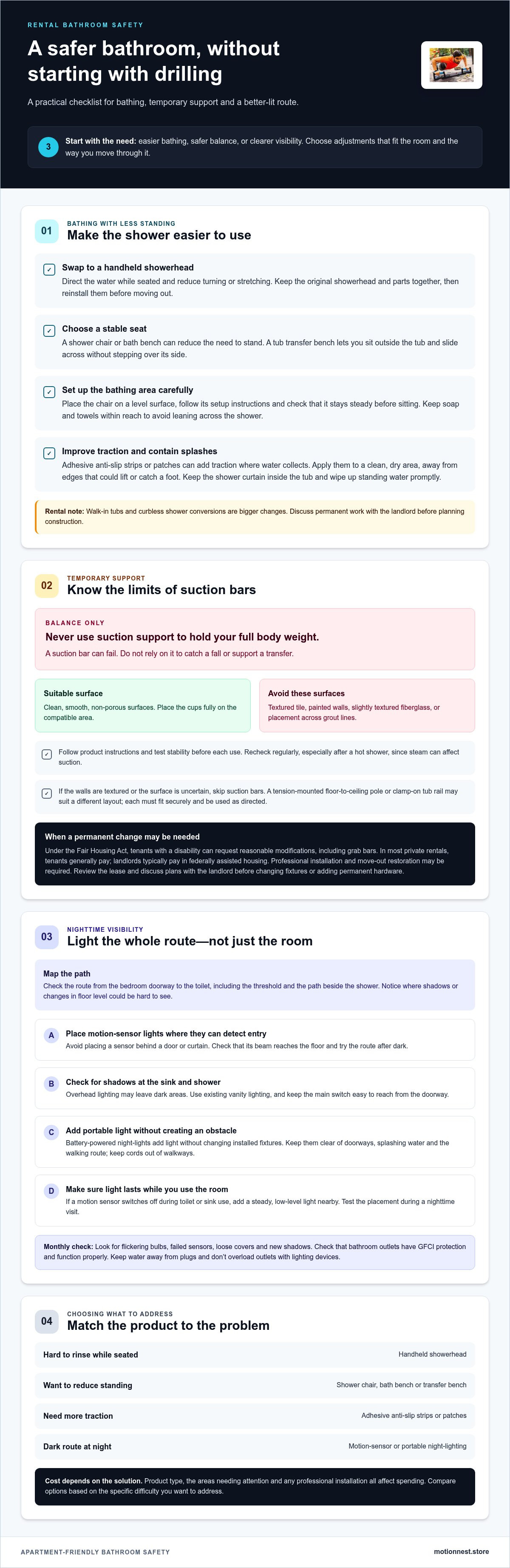
4. How much do bathroom safety products for renters cost?
There’s no single total cost for setting up a rental bathroom. Your spending depends on the products, which areas need attention, and whether changes require professional installation. A portable night-light and adhesive traction strips involve different materials and setup from a tub transfer bench or permanent fixture change. Start with the specific difficulty you want to address instead of buying a full set of products.
Make a short room-by-room list before comparing options. Note whether you need better lighting, seated bathing, more traction, or balance support. Then separate movable items from changes that attach to walls, floors, or plumbing. A handheld showerhead may require a fixture swap, while a chair or night-light can be moved without altering the room. Include installation or restoration work in your planning for permanent modifications.
Product design also affects the overall budget. A shower chair, transfer bench, anti-slip strips, and motion-sensor light each address a different need, so compare their function and setup rather than treating them as interchangeable. Check the instructions, surface requirements, and cleaning needs. A low-cost item that doesn’t fit your tub or bathroom layout may not help; choose an option suited to the specific task you identified.
To keep spending focused, prioritize the route or routine that feels most difficult. You might begin with lighting near the toilet, then consider seated bathing if standing through a shower is tiring. Add traction where water collects, and revisit the list after using each change. For balance support, compare bathroom safety support options with your surface and intended use in mind. This step-by-step approach helps you weigh practical value without relying on a generic package price.
Motion Nest: Bathroom Handrail With Vacuum Sucker For Safety Support
Motion Nest sells the Bathroom Handrail With Vacuum Sucker For Safety Support as a removable support option for renters. Consider it only if you need balance assistance on a compatible, smooth surface and its instructions suit your bathroom setup.
Suction support is not a substitute for a fixed grab bar. Use it for balance, not to hold your full body weight, and test its stability before every use. Avoid textured tile, painted walls, textured fiberglass, grout lines, and any surface where the cups cannot sit flat. Recheck the hold regularly, especially after hot showers, since steam can affect suction. If you need weight-bearing support or the surface is unsuitable, choose a different safety approach.
For a removable support choice that fits your rental routine, explore the handrail details and instructions. Visit motionnest.store to learn more.
Make your next bathroom change a thoughtful one
Let your daily routine guide your next adjustment. Notice where you pause, reach, or feel unsure, then choose one change to address that moment. Try it during your usual routine and consider whether it makes the movement easier or creates a new obstacle. A small, intentional step can help the space work better for the way you use it.
Keep rental limits in mind as your needs change. Before making a lasting alteration, discuss the plan with your landlord and consider how the bathroom may need to be restored. For removable support, match the option to both the surface and the type of assistance you need. This practical approach keeps apartment-friendly bathroom safety connected to your routine, not just a product list.
If bathroom handrail support is the next step you’re considering, contact Motion Nest for help. Choose a change that feels manageable, and build from there.
Frequently Asked Questions
What are the best alternatives to permanent grab bars for renters?
Choose support based on where you need help and the bathroom’s layout. A tension-mounted floor-to-ceiling pole avoids drilling, while a clamp-on tub rail can help beside a tub. Suction bars are for balance support only and only on smooth, non-porous surfaces. If you need support to bear your body weight, temporary options are not a replacement for a properly installed grab bar.
How can seniors make a rental bathroom safer?
Start by identifying the hardest part of the routine, such as entering the shower, reaching soap, or finding the toilet at night. Improve that specific spot first, then review the setup during normal use. An occupational therapist who specializes in home safety assessments can provide personalized recommendations and help prioritize changes based on mobility needs.
What are the best bathroom safety upgrades for seniors who rent?
The most useful upgrades address a person’s main risks rather than adding equipment everywhere. A seated bathing aid may help someone who tires while standing, while improved pathway lighting may suit someone who struggles to see at night. Wall-mounted soap and shampoo dispensers can also reduce loose bottles around the bathing area.
What bathroom safety equipment can renters install?
Renters can use movable equipment such as shower chairs, bath benches, portable lights, and removable traction strips. A handheld showerhead can replace a fixed fixture, with the original kept for reinstallation later. Permanent changes, including drilled grab bars, may require landlord permission and could involve restoration when the tenancy ends.
What bathroom safety improvements are suitable for renters and apartments?
Focus on changes that fit the room and the renter’s mobility needs. Keep the route between the bathroom entrance, shower, and toilet clear, and address leaks promptly because pooled water can create a slipping hazard. For electrical safety, bathroom outlets should have GFCI protection and function properly. Avoid changes that obstruct doors or narrow the walking path.
Which no-drill grab bars are safest for apartment bathrooms, and how are they installed?
No-drill suction bars are suitable only for clean, smooth, non-porous surfaces. They should support balance, not full body weight, and aren’t suitable for textured tile, painted walls, grout lines, or textured fiberglass. Follow the product’s installation instructions, press the cups onto a compatible surface, and test stability before use. Recheck the hold regularly, especially after hot showers.