
According to the Centers for Disease Control and Prevention, 1 in 4 older adults in the United States falls every year. Fall prevention for seniors living alone starts with safer everyday routes, secure support near the toilet or shower, and nonslip surfaces in the bathroom. A regular check-in from a relative, friend, or neighbor can also add peace of mind.
Wanting to stay independent while feeling safer at home is understandable. Small changes can reduce common hazards without disrupting familiar routines. This guide explains how health and home conditions can contribute to falls, which bathroom adjustments may help, and how to find local programs and personalized home-safety advice. You’ll also find practical ways to make everyday spaces easier to move through, supporting comfort, confidence, and independence.
Key Takeaways
- Explore local fall-prevention programs and ask about home-safety support. A trusted person’s regular check-ins can also help someone living alone feel more connected.
- Notice how health conditions, medications, vision, and home hazards can affect balance, then discuss concerns with a healthcare professional.
- Improve bathroom footing with nonslip mats and consider grab bars near the toilet or shower to support everyday movement.
- Reduce trip hazards and improve lighting to make familiar routes easier to navigate. Know how to reach someone for help after a fall.
1. Local home modification and fall-prevention programs
Assess each room by walking your usual route and noting where you reach for support, encounter clutter, or have trouble seeing. In the bathroom, check wet surfaces and the path to the toilet. In bedrooms and hallways, look for loose rugs, cords, and dim areas.
For local support in the United States, call 800-677-1116 to find your Area Agency on Aging and ask about nearby fall-prevention programs. Over half of Area Agencies on Aging provide home modifications, including handrails and nonslip bathmats. Ask what help is available for the changes your home needs. An occupational or physical therapist can assess how you move through your space and recommend personalized safety improvements.
Build a simple check-in routine with a relative, friend, or neighbor. A household member or trusted neighbor can check in once a day, helping someone notice quickly if you need support. If you live alone, consider an emergency response system that can alert 911 when you press its button. Keep a phone within reach as another way to call for help.
Improve lighting room by room. Place a lamp within reach of your bed, and use nightlights or motion-sensor lights in dark hallways and bathroom routes. Turn on lights before using stairs, and keep each step clearly visible. These practical changes can make nighttime movement easier and help prevent falls.
If a fall happens, pause and check for injury before trying to move. A person who is hurt or cannot get up independently should ask someone for help or call 911, according to the National Institute on Aging. Afterward, tell your doctor about the fall so you can discuss your risk of falling and possible home adjustments.
2. What causes falls in older adults?
The Centers for Disease Control and Prevention reports that one in four older adults in the United States falls annually. Falls can cause injury, limit everyday activities, and make independent movement harder. Tripping over loose rugs, poor lighting, and slippery shower floors are common household hazards. Balance changes, dizziness, and difficulty walking can also raise the risk of falling.
Health changes matter, too. Hypertension and diabetes can affect balance or alertness, while some medicines may cause dizziness or weakness. Older adults taking four or more medications daily should have them reviewed by a pharmacist or doctor at least once a year. Don’t stop or change a prescribed medicine on your own. Instead, note when symptoms occur and discuss possible side effects with your healthcare team.
A useful fall-risk assessment looks beyond the home. Tell your doctor about recent falls, feeling off balance, vision changes, and difficulty with activities such as standing from a chair. Share an up-to-date medication list and mention your health conditions. Your healthcare team can consider how symptoms, medicines, strength, vision, and home hazards interact, then suggest suitable modifications.
Tai Chi is recommended to improve balance. Before starting new exercises, talk with a doctor or physical therapist, especially if you feel unsteady. Sit-to-stand practice and standing balance exercises may suit some older adults, but these routines are intended for people at low risk who can stand without another person’s support. Have someone nearby during balance practice.
For bathroom transfers, explore the Bathroom Handrail With Vacuum Sucker For Safety Support as one home support option. The right approach depends on the person’s balance, health, medicines, and daily routines.
3. Bathroom grab bars and nonslip surfaces
Start with bathroom movements that challenge balance, such as stepping into a shower, sitting on the toilet, and standing again. Place grab bars near the toilet and shower to support these transitions. Reach for a steady handhold before shifting your weight, and move carefully across wet areas. Don’t rely on towel rails or nearby fixtures for support.
Use a nonslip mat in the bathtub or shower to improve footing. Set it flat, check it before bathing, and replace it if it shifts or curls at the edges. Keep soap, shampoo, and towels within easy reach so you don’t need to stretch or twist on a wet surface. Dry the floor promptly after bathing, and keep the path to the door clear.
Make stairs safer with secure handrails on both sides. Hold a rail while going up or down, and turn on the lights before using the stairs. Bare-wood steps can benefit from nonslip treads. Check that each step feels steady underfoot and stays clear of loose items that could cause a trip.
A physical therapist can assess how you move and recommend home safety changes suited to your needs. Ask for advice on bathroom transfers, the placement of support, and any stair challenges. Also set the water heater to 120 degrees F or below to help prevent scalding. Combining better footing, stable handholds, and clear routes can reduce everyday fall risks without changing familiar routines.
4. Fall prevention and maintaining independence
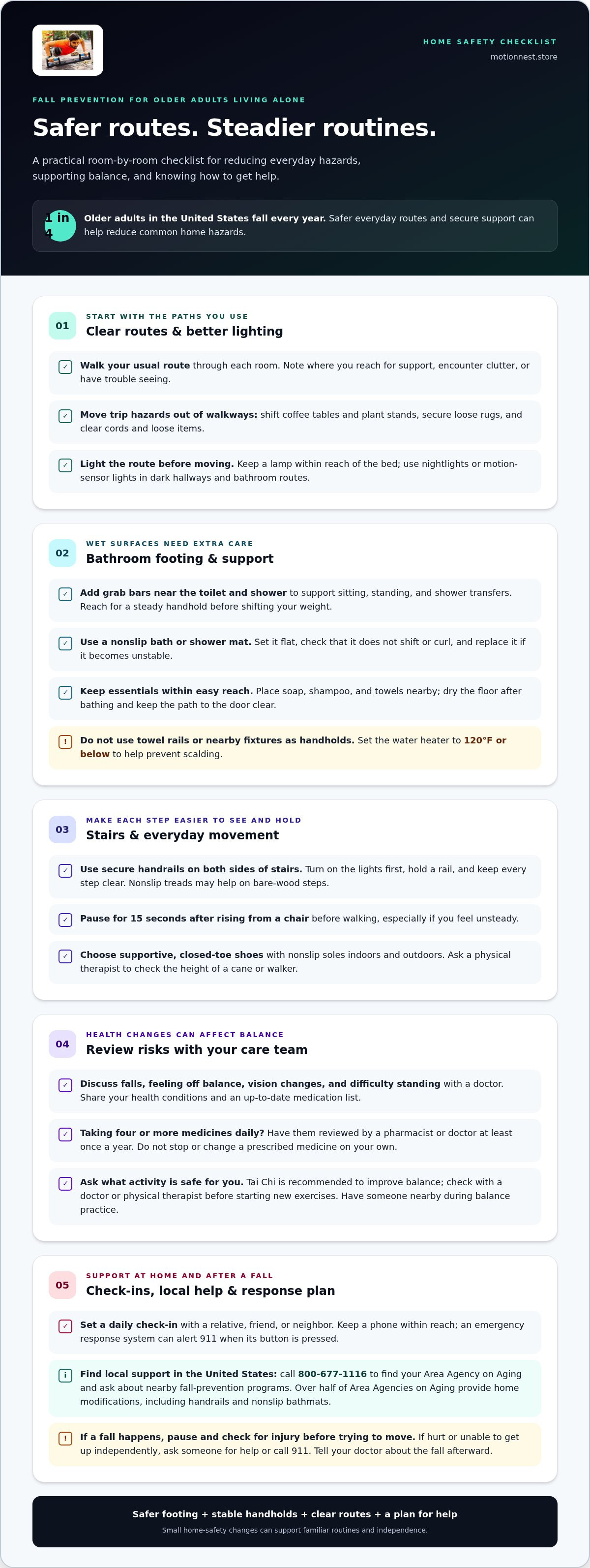
Effective fall prevention combines safer movement, practical home changes, and a plan for getting help. Start with routes you use every day, such as the path from bed to bathroom. Move coffee tables and plant stands away from walkways, secure loose rugs, and keep a charged phone close during daily activities. These steps reduce tripping hazards while helping familiar routines stay manageable.
Give your body time to adjust when standing. Pause for 15 seconds after rising from a chair before walking, especially if you feel unsteady. Wear supportive, closed-toe shoes with nonslip soles indoors and outdoors. If you use a cane or walker, ask a physical therapist to check its height. An aid that is too high or low can affect balance and walking.
Build strength and balance in ways that suit your health. Tai Chi is recommended for balance, and regular physical activity supports mobility. Ask your healthcare team which activities suit your balance, strength, and health conditions before starting a new routine. A physical therapist can help tailor exercises to everyday tasks, such as standing from a chair or turning safely.
Make a simple help plan with a friend or relative. Agree on a daily check-in and keep their number near your phone. If you fall and are hurt or cannot get up on your own, ask someone for help or call 911, according to the National Institute on Aging. Tell your doctor about any fall, even if you feel well afterward, and discuss what happened during the fall.
Choose one home change to tackle today, such as clearing a night-time route or improving bathroom support. Explore practical bathroom safety support as one way to consider added support during daily routines.
Motion Nest: Bathroom Handrail With Vacuum Sucker For Safety Support
Motion Nest offers the Bathroom Handrail With Vacuum Sucker For Safety Support as a bathroom support option for everyday routines. It may suit someone looking to add a handhold near a bathroom activity, alongside broader fall-prevention steps such as clear floors, good lighting, and nonslip surfaces.
Choose support with your specific movements in mind. A handrail should not replace a professional assessment if balance or transfers are difficult, and the product’s name alone does not explain how it should be installed or used. Follow the product instructions, and don’t rely on it beyond its stated use.
If this bathroom support option fits your needs, visit motionnest.store to explore it.
Make Your Next Safety Step Simple
Choose one change that fits your daily routine, then make it part of your home-safety plan. You might note where you feel least steady, write down questions for your healthcare team, or share your plan with someone you trust. A clear next step can make fall prevention for seniors living alone feel more manageable without turning familiar routines upside down.
If bathroom support is the change you’re considering, Motion Nest offers the Bathroom Handrail With Vacuum Sucker For Safety Support. Review it as one option for your home, and follow the product instructions for use. It’s a practical place to continue exploring bathroom safety at your own pace.
Explore the bathroom handrail at Motion Nest, and keep building a home routine that supports comfort and independence. Each thoughtful adjustment is a step toward feeling more prepared in your own space.
Frequently Asked Questions
How can my home better support me as I age?
Set up everyday spaces around the tasks you want to keep doing independently. Store frequently used dishes, clothing, and personal items within comfortable reach, and keep a clear place to sit while dressing or preparing food. Review the setup as your routines or mobility change. A room-by-room list of difficult tasks can help you prioritize practical adjustments.
What causes falls in older adults?
Falls can result from a mix of personal and environmental factors. For example, rushing to answer the door while carrying laundry can challenge balance and divide attention. Changes in strength, steadiness, or health may add to the challenge. Notice when and where movement feels difficult, then share those details with your healthcare team to guide a more useful fall-risk discussion.
Who can help me age in place?
A healthcare professional can help identify personal risks, while an occupational or physical therapist can consider how daily tasks and home layouts affect movement. A trusted friend or family member can help record problems, organize appointments, or support routine check-ins. For community resources in the United States, contact the Area Agency on Aging locator by calling 800-677-1116.
Which home modifications reduce fall risks for older adults, and what do they cost?
Helpful changes depend on where movement feels challenging and what the home already provides. Rearranging belongings may improve access without adding equipment, while changes that require products or building work depend on the home’s layout and the work involved. List the specific task or location you want to address, then seek an estimate for that work rather than relying on a broad average.
Does Medicare or Medicaid cover fall prevention programs, home safety equipment, or medical alert systems?
Don’t assume a particular program or device is automatically covered. Coverage can depend on the plan, state program, eligibility, and the exact item or service. Before making a purchase, identify the equipment or assessment you need and review your plan’s benefit information. Ask how that specific item or service is handled, and keep the response with your personal records.
What local fall prevention services or home safety assessments are available for seniors in the United States?
Area Agencies on Aging can point older adults toward nearby fall-prevention programs and home modification resources. Call 800-677-1116 to locate a local agency. Occupational and physical therapists can also assess how someone functions at home and suggest personalized safety improvements. When asking about local options, describe the rooms or daily activities that feel difficult so the discussion can focus on practical needs.