
A boxing machine for home workouts can bring guided rounds and punch tracking into your routine, but app features and movement feedback vary by model. The price depends on the specific setup, including its hardware and connected features, so compare what each option includes, not just its headline price.
A place to punch is only part of the appeal. Workout guidance can help you follow a session at home, while motion tracking can provide feedback as you practice. Since these tools differ, understand what each one does before choosing a machine.
This guide explains how app-based workouts and motion tracking can support boxing and kickboxing at home, which details to compare, and what affects a machine’s starting price. You’ll also learn how a Bluetooth boxing machine can fit into a home fitness routine and decide which setup suits your space and training style.
Key Takeaways
- Compare app guidance and motion feedback to see how each setup can support your boxing or kickboxing routine.
- Choose practice sessions that fit your space, comfort, and preferred pace at home.
- Understand which product details influence a machine’s starting price without assuming every model includes the same features.
- Plan your workout area around clear movement space and the equipment the machine requires.
- Explore Motion Nest’s Bluetooth boxing machine options as a practical next step for bringing a boxing workout into your home.
App features and motion-tracking technology
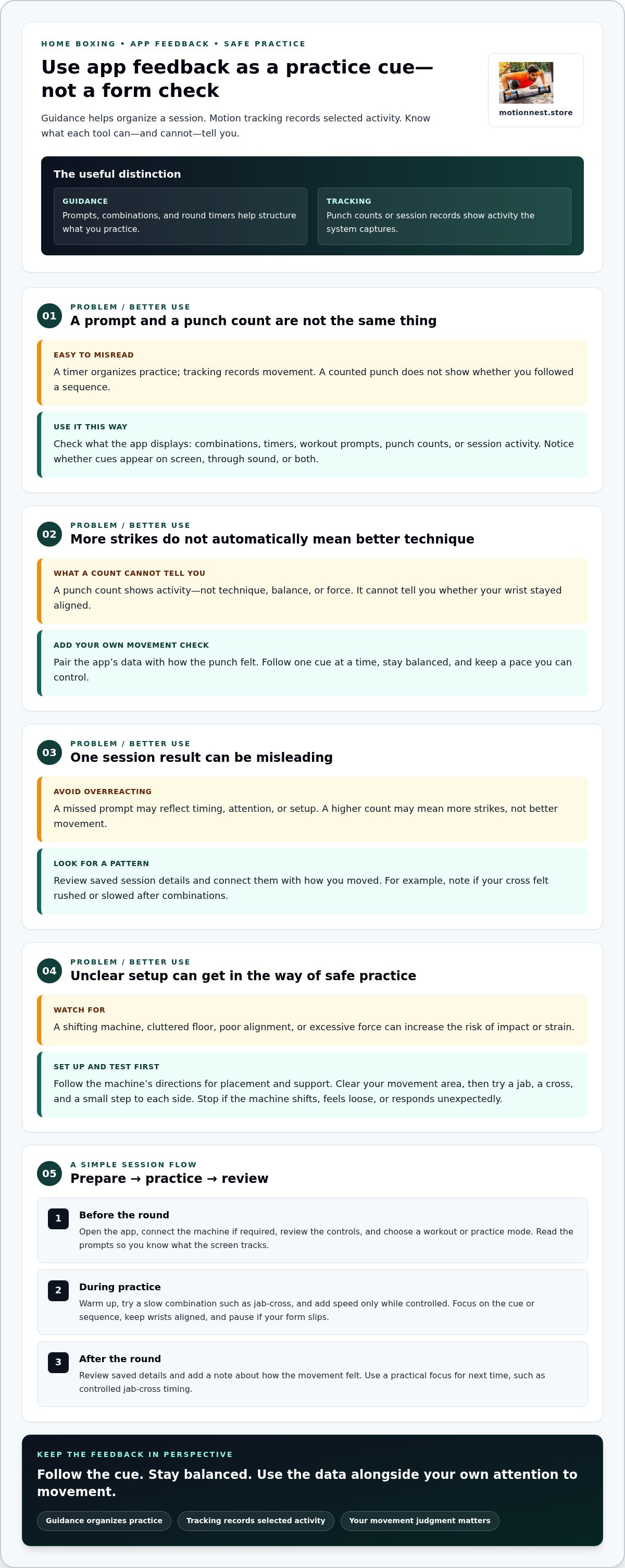
An app can guide practice on a boxing machine, but its tools vary by machine and app. Some apps display combinations, round timers, or workout prompts. Others record punch counts or session activity. Treat each feature separately: a timer organizes practice, while tracking records movement. For example, a guided combination might cue a jab followed by a cross. Check whether the cues appear on screen, come through sound, or use both. That can affect how easily you follow along.
Motion tracking describes how a system captures movement. Sensors may register contact, movement, or target sequences, and the app displays the data it receives. A punch count shows activity during a session; a sequence record may show whether you followed prompts. These measures are not the same. A counted punch does not reveal technique, balance, or force. A quick jab may register as one strike, but the count cannot show whether your wrist stayed aligned. Use app feedback as a practice cue, not a complete assessment of your form.
Before a session, open the app and review its controls. Connect the machine if required, then choose a workout or practice mode. Read the prompts first so you know what the screen tracks. During a round, follow one cue at a time. If the display counts strikes, compare the count with your pace. If the app gives a sequence, focus on its order. Afterward, review any saved session details. A note such as “jab-cross felt rushed” adds useful context to the data.
App displays can support consistent practice, but they do not replace your judgment. A higher count may mean more strikes, not better movement. Missing a prompt may reflect timing, attention, or setup. Look for patterns across sessions instead of reacting to one result. You might notice, for example, that your cross slows after several combinations. That gives you a specific focus for next time. Keep your goal practical: follow the cue, stay balanced, and use a pace you can control. Tracking is more useful when you connect a number or prompt with how the movement felt.
- Review the app’s workout options before choosing a session.
- Learn what each displayed count or prompt actually represents.
- Pair app feedback with your own notes on movement.
- Use one clear focus, such as controlled jab-cross timing.
For a boxing machine for home workouts, app features are most useful when they fit your routine. Beginners may value clear prompts and simple session records, while people practicing combinations may prefer visible sequence cues. Motion tracking can structure repetition, but your own attention helps you assess how each punch feels. Start with tools you understand, then use more features as they become relevant to your practice.
At-home boxing and kickboxing training
A useful home session combines controlled movement, planned punches, and rest. Start by considering your space, setup, experience, and preferred training style.
Space and Equipment Needs
Choose a spot where you can face the target and move freely. Before training, test a jab, a cross, and a small step to each side. Keep furniture, pets, and loose items outside your movement area. Follow the machine’s instructions for placement and support. Your available floor space and the machine’s design determine the best position.
Wear comfortable clothes and stable footwear suited to your floor. Hand wraps or boxing gloves can protect your hands against the striking surface, if the machine’s instructions allow them. Keep a towel and water nearby, but outside your movement path. For kickboxing practice, leave room to step and lift your legs without hitting furniture. Use the machine only for movements it supports.
Installation and Safe Use
Follow the machine’s instructions from setup through first use. Place or secure it as directed, then check that it stays steady. Keep the display or controls visible if your session uses prompts. Before a full round, try a light jab and cross. Stop if the machine shifts, feels loose, or responds unexpectedly. Don’t improvise a mounting method.
Build a session in simple stages: warm up, practice a slow combination, then add speed only while staying controlled. For example, alternate a jab-cross with a short pause. Keep wrists aligned and avoid swinging beyond your comfortable range. The Bluetooth Boxing Machine is one option for a home setup; use its supplied directions for installation and operation.
Training for Different Fitness Levels
Are boxing machines suitable for beginners and different fitness levels? Yes. Beginners can start with basic punches at a slower pace, while experienced users can add combinations and footwork. Adjust pace, movement, and rest to your ability. A jab-cross gives newcomers a clear pattern; more practiced users can change direction or add defensive movement.
For a beginner session, practice the jab before adding the cross. Keep your feet balanced and pause if your form slips. In kickboxing, separate hand combinations from kicks unless the machine is designed for kicking. You can practice a step, knee lift, or controlled leg movement beside the target. Focus on one skill per session.
Risks and Injury Prevention
What are the risks of using a boxing machine, and how can you prevent injuries? Poor alignment, excessive force, a shifting machine, or cluttered flooring can increase the risk of impact or strain. Check the setup, clear the floor, and begin with light contact. Stop if you feel pain, dizziness, or unusual discomfort.
Warm up with comfortable shoulder, arm, and foot movements before striking. Keep punches controlled, especially when practicing a new combination. Avoid locking your elbow at the end of a jab or cross. Pause if your technique becomes rushed. For example, slow down to a jab-cross and reset your stance before continuing.
Starting price
A starting price is the lowest listed cost for a specific setup. Compare complete listings, not broad labels such as “smart boxing machine.” A wall-mounted target and a freestanding unit may include different parts. App access can also change what a package offers. Treat each listing as its own configuration to make prices easier to understand and compare.
First identify what the listed price covers. Check for the machine, mounting parts, and included accessories. Then see whether app access comes with the purchase or uses a separate plan. One listing might pair a target with app guidance, while another focuses on hardware alone. These are different setups, even if both support home practice. Compare like with like before deciding which starting price suits you.
Shipping, taxes, and optional add-ons can change the final checkout total. A product page may show the machine price before delivery charges, while another listing may show a bundle. Read the order summary before buying. Separate the base item from extras such as wraps, gloves, or accessories. Those additions may suit your routine, but they are not part of the machine’s starting price.
Use this simple comparison process:
- Choose the machine type that fits your room and training style.
- Record which parts and accessories the listing includes.
- Check whether app features require separate access.
- Compare delivery charges and the checkout total.
- Decide whether each added feature serves a real need.
These steps help you avoid comparing a basic setup with a bundle. A higher-priced listing may include more equipment rather than a different target, while a lower-priced one may require separate accessories. Value depends on what you’ll use. App access may matter if you plan short guided sessions. If you mainly practice simple combinations, extra digital tools may be less important.
Consider the space and setup needs discussed in this guide. A machine that fits your room may be more practical than a feature-heavy option that does not. Check installation requirements, included mounting parts, and the space needed. These details affect what you must prepare at home and whether the listed configuration suits your intended use.
To find a genuine starting price, look for the lowest current listing for the exact configuration you want. Confirm the product version, included items, app arrangement, and checkout charges. Don’t mistake a promotional bundle or optional accessory for the base setup. Comparing these details gives you a realistic view of the purchase without relying on category-wide estimates or assumptions.
How much space and what equipment do I need to set up a home boxing machine?
Start by mapping the movements you plan to practice. A straight punch needs less room than a side step or kick. Stand where the target will go and rehearse a jab, cross, and small step. Keep your hands and feet clear of walls, furniture, lamps, and low shelves. Check your full movement path, not just the space directly in front.
Next, choose a stable, level spot for the machine. Follow its instructions for floor placement, mounting, and support. A freestanding model and a wall-mounted target need different setups. Don’t assume a doorway, shelf, or temporary support can hold the machine. Make sure the target stays steady during light practice before adding stronger contact, and keep the route around it clear.
Match the surrounding space to your workout. Boxing combinations may need room for small steps and turns; kickboxing needs extra clearance for controlled leg movements. Try each motion slowly before a full session. If your heel or elbow comes close to an object, move the setup or adjust the movement. A floor mat can mark your training area, but it must lie flat and stay in place.
Gather only the equipment your routine and machine require. Comfortable clothing and stable footwear support movement. Hand wraps or gloves may help when striking, if the machine’s instructions allow them. Keep a towel and water within reach, but outside your movement path. If the machine uses an app or power connection, place your phone or cable where it cannot become a trip hazard.
- Measure the setup area: include the machine and your movement path.
- Clear the floor: move cords, toys, and loose items away.
- Check the support: follow the specified mounting or placement method.
- Test your reach: practice punches and steps at a controlled pace.
- Position essentials: keep water and towels nearby, but out of the way.
Before your first full workout, inspect the setup again. Check that nearby doors can open without entering your training area, and let household members know when you’re practicing. A shared living room, for example, may need a quick furniture reset before each session. Store gloves and wraps together afterward to make setup easier next time. A boxing machine for home workouts works best when its location supports safe movement and an easy routine.
How do I install and use a boxing machine safely at home?
Start with the machine’s instructions. Models can differ in mounting, placement, and controls. Choose the intended surface before unpacking parts. Clear the workout area, then inspect the floor or wall. For example, don’t mount equipment on a surface that conflicts with its instructions. Keep children and pets away during setup.
Follow the setup sequence in the manual:
- Lay out the machine parts and supplied hardware.
- Match each part to the illustrated instructions.
- Secure or position the machine as directed.
- Check that the unit sits firmly before striking.
- Place any phone or cable outside your movement path.
Use only the installation method designed for the model. Don’t substitute household hooks, shelves, or improvised fasteners. If a step calls for a particular tool or surface, follow that requirement. After setup, apply light pressure to the target. Stop and review the instructions if the machine shifts, tilts, or feels unstable.
Begin with a brief movement check. Stand at a comfortable distance and rehearse a slow jab, then a cross. Keep your wrist aligned with your forearm. Avoid locking your elbow or swinging beyond your controlled reach. Stop if the target moves unexpectedly and recheck its placement before trying again. Increase your pace only while your stance and punches remain controlled.
Prepare your body before a session. Move your shoulders, arms, and feet comfortably, then start with light punches. A jab-cross lets you test your reach and balance. For kickboxing, practice controlled leg movements only if the machine supports them. Don’t assume every target is designed for kicks. Keep your path clear, including the space behind each step or turn.
During a workout, use short combinations and pause to reset. For example, try a jab-cross, lower your hands, and check your stance. Stop if you feel pain, dizziness, or unusual discomfort. Don’t keep striking if the machine loosens or your movement feels uncontrolled. Afterward, inspect the setup and keep loose accessories off the floor.
Ready to compare a home option? Explore Bluetooth boxing machines and use each model’s instructions for setup and practice.
Motion Nest: Bathroom Handrail With Vacuum Sucker For Safety Support
Motion Nest offers the Bluetooth Boxing Machine 1610571, 1953301, 4257329 for readers exploring a home boxing setup. It can be a practical next step when you’re ready to choose a machine for your own routine. The Bathroom Handrail With Vacuum Sucker For Safety Support is a separate home product, not boxing equipment. Choose the item that fits your needs: boxing practice or bathroom support. Browse the product details to see what suits your home. Visit Motion Nest online to explore its offerings.
Make Your Next Home Workout Easy to Begin
Choose a setup that suits the way you want to move, then keep your first session simple. A boxing machine for home workouts can be part of a broader routine alongside bodyweight practice or other practical home essentials. Focus your next step on what you’ll use regularly.
Motion Nest offers the Bluetooth Boxing Machine 1610571, 1953301, 4257329, the Coded Push Up Muscle Board, and the Bathroom Handrail With Vacuum Sucker For Safety Support. These products suit different needs, from home exercise to added bathroom support. Explore the options with your own space and everyday routine in mind.
Ready to take a closer look? Contact Motion Nest to explore its offerings. Start with the product that best matches your plans, and build a home routine that feels practical and comfortable.
Frequently Asked Questions
How much does a home boxing machine cost?
The starting price depends on the machine setup and what it includes. Compare the exact model, accessories, and app access before judging listings. A bundle with extra equipment differs from a machine-only option. Review delivery charges and the checkout total, too, so you can budget for the full purchase instead of relying on the headline price.
What features should I look for in a smart boxing machine?
Choose features that match the way you plan to train. Look for clear workout prompts, easy-to-read feedback, and tracking that explains what it records. A punch count can help you follow activity, while combination cues guide sequence practice. Consider how the app connects and whether its controls are easy to use. A feature is most useful when you understand its purpose and can apply it to your routine.
What boxing workout routines can I do with a home boxing machine?
A boxing machine for home workouts can support focused combinations, rhythm practice, and movement drills. Try a jab-cross, then add a hook when the sequence feels controlled. You can also practice stepping back after a combination, resetting your stance, and starting again. For variety, alternate hand combinations with footwork rounds. Keep kickboxing movements separate unless the machine is designed for kicks.