
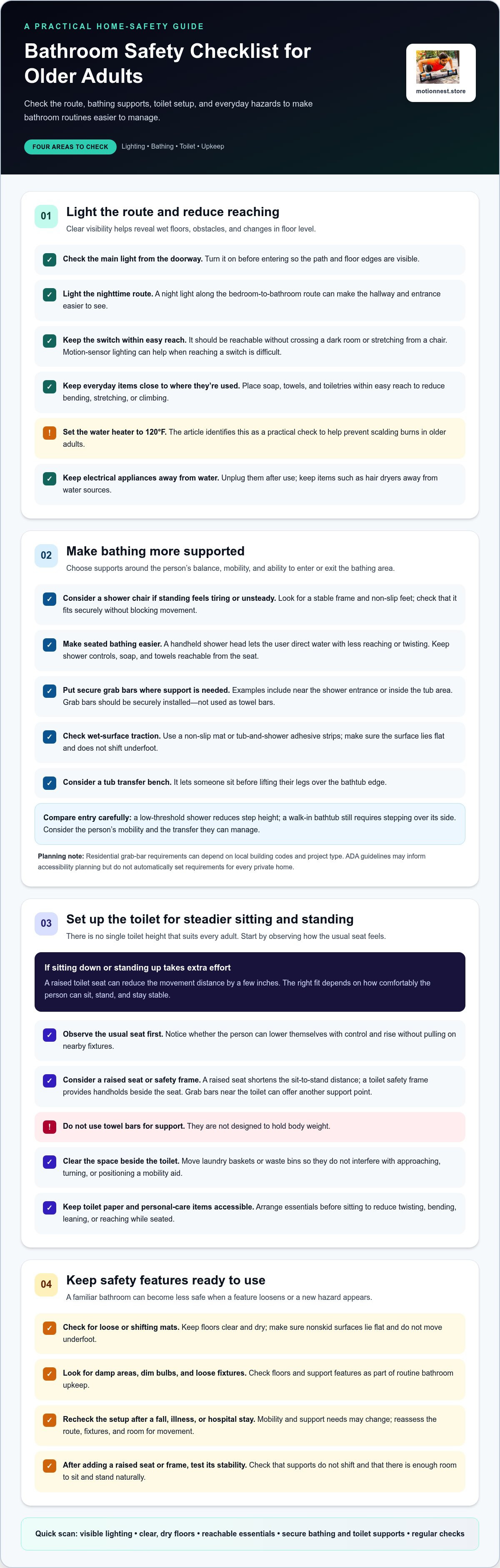
A safer bathroom starts with practical checks: improve lighting, keep floors clear and dry, use a suitable shower seat if standing feels unsteady, and add support where it’s needed. A bathroom safety checklist for elderly adults should also include electrical appliances: unplug them when they’re not in use and keep them away from water.
It makes sense to focus on obvious hazards like slippery floors, but safety features need regular attention too. A loose mat, dim bulb, or appliance left near water can make a familiar routine less safe.
Use this checklist to assess lighting, choose a shower chair or bath bench, make sitting down and standing up at the toilet easier, and maintain key safety features. Small checks can make everyday bathroom routines more comfortable and manageable.
Key Takeaways
- Place a light switch within easy reach and keep everyday bathroom items accessible to reduce stretching and bending.
- Choose a shower chair with a stable frame and non-slip feet, and use secure grab bars for support when entering or leaving the shower.
- Consider a raised toilet seat or safety frame if sitting down or standing up takes extra effort.
- Make routine checks for loose mats, damp floors, and loose fixtures so safety features stay ready to use.
How does lighting affect bathroom safety?
Good lighting helps seniors spot wet floors, obstacles, and changes in floor level. Check the bathroom entrance, sink, toilet, and shower. Clear visibility can make nighttime trips easier and help prevent accidents during everyday routines.
Set the water heater to 120 degrees F to help prevent scalding burns in older adults. This temperature setting is one practical check to include alongside lighting and floor safety.
- Check the main light from the doorway. Turn it on before walking into the bathroom so the path and floor edges are visible.
- Add a night light along the bedroom-to-bathroom route. Light the hallway and bathroom entrance to make nighttime steps easier to see.
- Keep the light switch within easy reach. Place it where someone can turn it on without crossing a dark room or stretching from a chair.
- Look closely at the sink area. Bright lighting helps reveal splashed water on smooth floors, where reduced traction can make standing or sitting less steady.
- Keep everyday items within easy reach. Place soap, towels, and toiletries near their usual use points to reduce bending, reaching, or climbing.
- Use motion-sensor lighting if helpful. It can turn on automatically when someone enters, which is useful when reaching a switch feels difficult.
- Unplug electrical appliances after use. Keep items such as hair dryers away from water sources to reduce bathroom electrical risks.
The National Institute on Aging recommends better lighting, grab bars, and nonskid mats as practical home changes that can help reduce fall risks. Review these features regularly, especially after a change in mobility. A well-lit route, clear surfaces, and items placed at a comfortable height can make bathroom routines easier to manage.
Do I need a shower chair or bath bench?
A shower chair can help if standing during a shower feels tiring or unsteady. It lets you sit while bathing, reducing the need to stand for long periods. Choose a chair with a stable frame and non-slip feet, and check that it fits securely in the shower without blocking movement.
A handheld shower head can make seated bathing easier by letting you direct the water with less reaching or twisting. Keep soap and towels close, and make sure the shower controls are reachable from the seat. Caregivers can help assess whether the seat leaves enough room to enter, exit, and move safely.
- Add secure grab bars. Place them where support is needed, such as near the shower entrance or inside the tub area. Grab bars should be securely installed, not used as a substitute for towel bars.
- Improve wet-surface traction. Use a non-slip mat or adhesive strips designed for tubs and showers. Check that the surface stays flat and doesn’t shift underfoot.
- Consider a tub transfer bench. It lets someone sit before lifting their legs over the bathtub edge, which can make tub entry less demanding.
- Compare entry styles carefully. A low-threshold shower reduces the height of the step, while a walk-in bathtub still requires stepping over its side. Consider the person’s mobility and the transfer they can manage.
Residential grab-bar requirements can depend on local building codes and the type of project. ADA guidelines may inform accessibility planning, but they do not automatically set requirements for every private home.
If you’re considering an additional bathroom support option, explore the Bathroom Handrail With Vacuum Sucker For Safety Support. Use a shower chair, transfer aid, or securely installed grab bar when those features are needed for bathing support.
How high should a toilet be for safer sitting and standing?
There isn’t one toilet height that suits every adult. If sitting down or standing up takes extra effort, a raised toilet seat can reduce the distance of the movement by a few inches. The right fit depends on how comfortably the person can sit, stand, and stay stable.
Start with the usual toilet seat. Notice whether the person can lower themselves with control and rise without pulling on nearby fixtures. If the movement feels difficult, consider a raised seat or a toilet safety frame with support rails.
- Check whether a raised toilet seat helps. It shortens the distance to sit and stand, which may make the movement easier for someone with limited strength or mobility.
- Choose a support frame when handles are needed. A toilet safety frame provides handholds beside the seat for lowering and rising, while grab bars near the toilet can offer another support point.
- Keep towel bars out of the support routine. They aren’t designed to hold body weight, so don’t use them to steady yourself while standing up.
- Keep the floor space beside the toilet clear. Move a laundry basket or waste bin so it doesn’t interfere with approaching, turning, or positioning a mobility aid.
- Place toilet paper and toiletries within easy reach. Store frequently used items where they can be reached without twisting, bending, or leaning away from the seat.
- Arrange essentials before sitting. Put toilet paper and personal care items in their usual accessible spots, so there’s less need to reach while seated.
After adding a raised seat or frame, check that the seat feels stable and the supports don’t shift during use. Keep the route to the toilet clear, and make sure the frame leaves enough room to sit and stand naturally. Reassess the setup after a change in mobility, such as recovery from an illness or hospital stay.
Maintaining bathroom safety features
Safety features need routine checks to stay useful. Inspect the bathroom after a fall, illness, or hospital stay, since mobility and support needs may change. Look for new hazards, loose fittings, and damp areas that could make bathing or standing less comfortable.
- Keep floors dry and clear. Wipe up puddles, and remove loose towels, rugs, and clutter from walking paths to reduce slipping and tripping hazards.
- Check bath mats after use. Make sure each mat lies flat, stays secure, and has no curled edges that could catch a foot.
- Inspect support features. Check grab bars, towel racks, and shelves for looseness. Grab bars in shower and tub areas should remain securely installed.
- Look for leaks and damaged seals. Inspect pipes, faucets, toilets, and bathroom seals for water that could reach the floor or create a slippery surface.
- Review the raised toilet seat. Check that it stays stable during sitting and standing, and that the surrounding area remains clear.
- Keep electrical appliances unplugged when unused. Store them away from sinks, tubs, and other water sources.
- Keep help within reach. Place an emergency call system or alert button near the toilet or shower so it can be reached from the floor or seat.
- Review hot-water protection. An anti-scald device or lower water-heater temperature can help prevent accidental burns.
Make these checks part of a familiar bathroom routine, such as looking over the floor after bathing and checking fixtures during regular cleaning. If a mat slides or a fitting feels loose, address the hazard before the next bathroom visit. Recheck the setup after any change in mobility.
For an additional bathroom support option, explore the Bathroom Handrail With Vacuum Sucker For Safety Support.
Motion Nest: Bathroom Handrail With Vacuum Sucker For Safety Support
Motion Nest offers the Bathroom Handrail With Vacuum Sucker For Safety Support as an additional bathroom support option. It may suit someone looking for a handhold during bathroom routines. Choose support based on where it will be used and the person’s movement needs.
For steady support beside a toilet or in a shower, securely installed grab bars are a suitable option. A suction-style handrail differs from a permanently installed grab bar, so use it as directed and don’t rely on it to bear body weight unless its instructions allow that use. Keep the wider safety setup in place, including clear floors and secure bath mats.
Visit motionnest.store to explore the Bathroom Handrail With Vacuum Sucker For Safety Support.
Make Your Next Safety Check Count
Choose one bathroom adjustment to review today, then make it part of a regular home-safety routine. A short note can help you remember what needs attention, such as a worn mat or a support feature that has shifted. Revisit the bathroom safety checklist for elderly household members after a change in mobility or daily routines, so the setup continues to suit the person using it.
If you’re looking for an additional bathroom handhold, Motion Nest offers the Bathroom Handrail With Vacuum Sucker For Safety Support. Consider it as one part of a broader setup, not a replacement for securely installed grab bars where those are needed. Choose support that fits the person’s needs and the way they use the bathroom.
Explore Motion Nest’s bathroom handrail and choose a practical next step for a safer-feeling routine.
Frequently Asked Questions
Are electrical appliances a safety concern in the bathroom?
Yes, appliances can create a safety concern around bathroom water. Unplug electrical items when they’re not in use, and keep them away from sinks, tubs, and wet counters. For example, put a hair dryer away after use instead of leaving it beside the basin. Check cords for damage, and keep plugs and appliances out of splash zones.
Does Medicare Pay for Bathroom Remodels or Safety Equipment?
Medicare coverage isn’t automatic just because a remodel or item supports bathroom safety. Treat renovation work and individual safety equipment as separate coverage questions: a remodel changes the home, while equipment is a specific item. The relevant benefit terms determine how an expense is considered. Identify the exact work or product first, then review the applicable Medicare coverage information before planning a purchase.
How can I prevent slipping in the tub or shower?
Improve traction with a non-slip mat or adhesive strips made for wet areas, and keep the surface free of soap buildup. Check that the mat stays flat and doesn’t shift when stepped on. After bathing, remove standing water and hang wet towels away from the walking path. Replace worn or peeling strips so they don’t create uneven spots.
Is it safer for an elderly person to take a shower or a bath?
The safer choice depends on how the person enters, exits, and moves in each setup. A shower may suit someone who can step in comfortably, while a tub requires clearing the bathtub edge. Consider balance, strength, and whether the person can sit securely. A seated shower can reduce time spent standing, while a transfer bench can help with tub entry.
What Does a Senior-Friendly Bathroom Remodel Look Like?
A senior-friendly remodel supports the person’s actual movements through the room. Plan clear space for turning and transfers, and position the toilet, sink, and bathing area for easy access. Choose surfaces designed for wet areas and place controls within reach. The layout should also leave room for a mobility aid if one is used.
What should be included in a bathroom safety checklist for older adults?
Include checks for lighting, clear paths, dry floors, secure bath mats, and firmly attached support features. Also review shower seating, toilet access, water temperature, and whether everyday items are easy to reach. A bathroom safety checklist for elderly adults works best when revisited after a fall, illness, hospital stay, or noticeable change in mobility.