
Safer bathroom routines often start with making everyday movements easier. If you’re wondering how to make the bathroom safer for seniors, focus on practical changes: raise the toilet seat, add a shower chair, place stable grab bars where support is needed, and keep essentials within easy reach. An emergency button can also make it easier to call for help.
It’s easy to focus on slippery floors, but reaching overhead or bending for shampoo can also make a routine feel less steady. Thoughtful adjustments can reduce awkward movements and make daily bathroom tasks more comfortable.
Read on for practical ways to use raised toilet seats, shower chairs, grab bars, emergency buttons, and accessible storage. You’ll also learn how a bathroom handrail with vacuum suction can provide added support, and how it fits into a broader safety plan.
Key Takeaways
- Choose a raised toilet seat to make sitting down and standing up require less bending.
- Use a shower chair or bench to make bathing more comfortable while seated.
- Place securely installed grab bars where support is needed, and keep a way to call for help within reach.
- Arrange everyday bathroom essentials at an easy-to-reach height to reduce bending and stretching.
1. Raised toilet seats
For limited mobility, pair a raised toilet seat with a properly secured toilet grab bar. Choose a seat height that reduces bending while allowing the person to sit and stand with control. The right fit depends on their mobility and how their feet meet the floor. A commode chair is another option that can help prevent falls.
A raised toilet seat reduces how far a person needs to lower themselves when sitting and the effort needed to stand. This can make the transfer feel more manageable for someone with stiff joints, reduced leg strength, or balance concerns. Before choosing a seat, consider whether the person can sit without dropping quickly and stand without pulling on an unstable surface.
Toilet grab bars can add support beside the toilet. Install them vertically or horizontally into wall studs, not diagonally, and don’t use a towel rack or toilet paper holder as a handhold. Toilet grab bars are recommended about 33 to 36 inches from the floor. Their position should also match the user’s reach and the direction they move when sitting or standing.
Some raised toilet seats require little modification and can be removed without long-term damage. Check that the seat fits securely and doesn’t shift during a transfer. Keep the floor around the toilet clear, and wipe up slippery spills promptly. An unobstructed path gives the person room to approach, turn, and sit without navigating around clutter.
Make the transfer routine deliberate. Encourage the person to sit before urinating and avoid standing up suddenly afterward. If sitting and rising still feel unsafe, a commode chair may offer another toileting option. For anyone with limited mobility, consider how the seat, grab bar, and available space work together instead of treating each item as a separate fix.
2. Shower chairs and benches
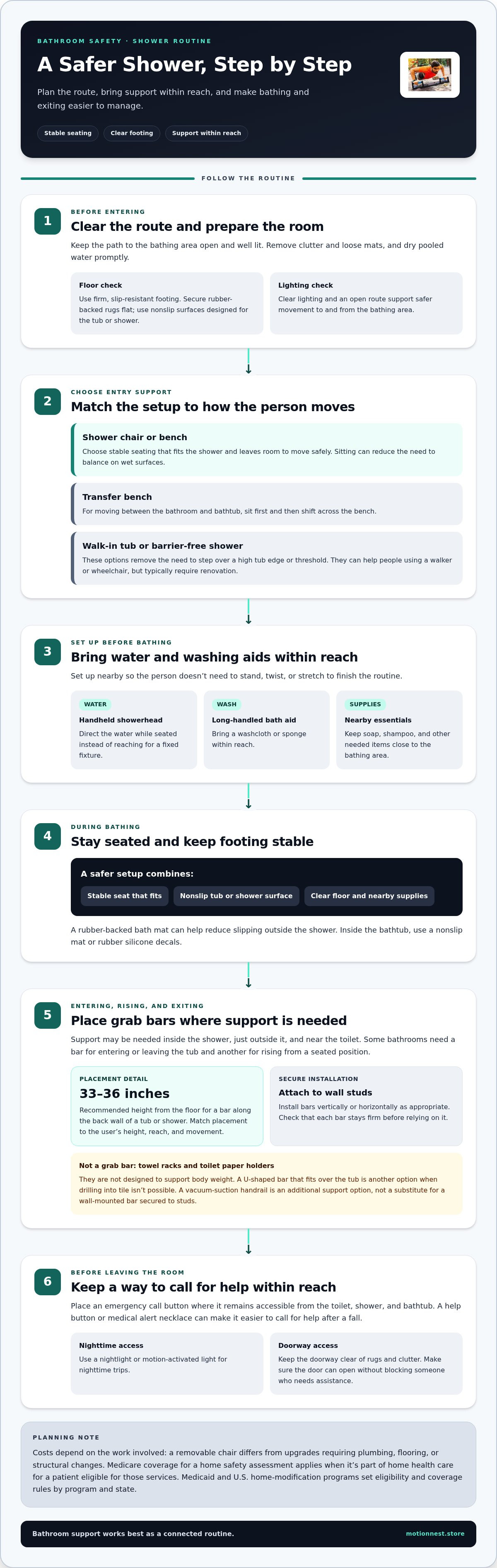
A shower chair or bench lets older adults bathe while sitting instead of balancing on wet surfaces. Choose a stable seat that fits the shower and leaves room to move safely. Keep the floor clear, and dry standing water promptly. A rubber-backed bath mat can help reduce slipping outside the shower, while a nonslip mat or rubber silicone decals inside the bathtub can improve footing.
Pair the seat with a handheld showerhead. The bather can direct the water while seated instead of standing or twisting to reach a fixed fixture. Long-handled bath aids can also bring a washcloth or sponge within reach. Store them nearby so the person doesn’t need to stand or stretch during bathing.
A transfer bench can help someone move between the bathroom and bathtub by sitting first, then shifting across the bench. A walk-in tub or barrier-free shower removes the need to step over a high tub edge or threshold. These changes can help people who use a walker or wheelchair, but a barrier-free shower or handicap tub typically requires renovation. Clear lighting and an open route to the bathing area also support safer movement.
The safest flooring is firm, slip-resistant, and free of loose mats or pooled water. Secure rubber-backed rugs flat, and use nonslip surfaces designed for the bathtub or shower. Effective fall prevention combines seated bathing, stable footing, clear lighting, and support where the person enters or exits.
Costs depend on the work involved: a removable chair differs from upgrades that require plumbing, flooring, or structural changes. Medicare coverage for a home safety assessment applies when it’s part of home health care for a patient eligible for those services. Medicaid and U.S. home-modification programs set eligibility and coverage rules by program and state.
For additional bathroom support beyond seated bathing, explore bathroom safety support options.
3. Bathtub grab bars and emergency buttons
Place grab bars where a person needs support: inside the shower, just outside it, and near the toilet. A bar along the back wall of a tub or shower is ideally installed 33 to 36 inches from the floor. The right position should also match the user’s height, reach, and movement when stepping in, sitting, or standing. Adding support in more than one location can make bathroom routines easier to manage.
The best orientation depends on the user’s needs and the installation. Secure them to wall studs, not towel racks or toilet paper holders, which aren’t designed to support body weight. A carpenter or another professional can install bars at a suitable height and angle. Some bathrooms need a bar for entering or leaving the tub and another for rising from a seated position. Check that each bar stays firm before relying on it.
If drilling into tile isn’t possible, a U-shaped grab bar that fits over the tub is another option. Position it to support the person’s actual movement, rather than using it as a substitute for a bar in a different location. A handrail with vacuum suction can provide another support option, but don’t treat it as a wall-mounted grab bar secured to studs.
Keep an emergency call button within reach of the toilet, shower, and bathtub. A help button or medical alert necklace can make it easier to call for help after a fall. Bathroom lighting and door access matter, too: add a nightlight or motion-activated light for nighttime trips, and keep the doorway clear of rugs and clutter. Make sure the door can open without blocking someone who needs assistance.
For someone with balance or mobility concerns, place the alert where it remains accessible while sitting or bathing. Having another person nearby can provide immediate help if a bathroom fall occurs. Secure grab bars, clear access, useful lighting, and a reachable alert can help prevent delays when support is needed.
4. Accessible bathroom storage
Accessible storage can make everyday bathroom tasks easier without changing the room’s layout. If you’re deciding how to make the bathroom safer for seniors, start by noticing what the person reaches for during a normal morning routine. Keep those items in predictable places at a comfortable height. This can limit searching, twisting, and reaching while standing on a damp floor.
Group supplies by task instead of storing everything together. Place a toothbrush, toothpaste, and face cloth near the sink. Keep shampoo and soap together in the shower, and put a clean towel near the exit. This simple routine map can help adults with limited mobility move from one task to the next without crossing the room for forgotten items.
Use a suction-cup caddy or shelf to keep shower products close at hand. Position it within reach while seated, and arrange bottles with labels facing forward. A shallow tray on the vanity can hold small daily items and keep them from rolling toward the edge. Keep heavier containers low enough to lift comfortably, but off the floor so no one has to bend and risk losing balance.
Review the arrangement after the person completes a regular routine. Notice whether a drawer is difficult to open, a shelf blocks a transfer, or an item gets knocked down. Move supplies that require two hands, awkward turning, or overhead reaching. The goal is to eliminate avoidable movements and preserve a clear path for mobility aids.
A practical answer to how to make bathroom safer for seniors is to make essential items easy to reach and return. For added support during bathroom routines, explore the Bathroom Handrail With Vacuum Sucker For Safety Support.
Motion Nest: Bathroom Handrail With Vacuum Sucker For Safety Support
Motion Nest’s Bathroom Handrail With Vacuum Sucker For Safety Support is an option to consider when planning bathroom routines. It may suit someone looking for an additional handhold near a smooth bathroom surface, alongside changes such as clear pathways and accessible storage. Suction-mounted support is not a substitute for grab bars secured into wall studs, especially when a person needs equipment to bear their weight. Match support choices to the person’s mobility and how they move through the bathroom.
Use this product as one part of a broader safety plan, not as a replacement for appropriate grab bar installation or professional guidance for significant mobility needs. Choose the supports that fit the bathroom and the user’s routine. Visit Motion Nest to explore its bathroom handrail.
Make the Next Change One That Fits
A useful next step is to walk through the bathroom with the senior who uses it. Ask which part of the routine feels awkward, then focus on that moment first. Changes are more likely to work when they support the person’s habits, movement, and comfort instead of changing everything at once. This practical review can guide how to make a bathroom safer for seniors in a way that feels personal and manageable.
Keep the conversation open as needs change. A setup that works today may need adjusting if balance, mobility, or daily routines shift. Small, thoughtful choices can make the bathroom easier to use without making it feel unfamiliar.
If an additional handhold suits the routine, explore the Bathroom Handrail With Vacuum Sucker For Safety Support at Motion Nest. Take the next step at a pace that feels right, and keep the focus on comfort and everyday independence.
Frequently Asked Questions
Where should grab bars be installed in a senior’s bathroom, and what weight rating should they have?
Install bars where the person needs a steady hand during transfers, such as beside the toilet and at the shower entrance. Securely mounted bars should be anchored to wall framing, not attached only to drywall. Choose a bar with a manufacturer-listed weight capacity that suits the user, considering both body weight and the force applied while moving. A physical or occupational therapist can help identify useful positions.
Are suction-cup grab bars safe for seniors, or should bars be professionally mounted?
Use suction-cup bars as supplemental handholds, not as a replacement for securely mounted grab bars when someone needs weight-bearing support. Suction depends on a clean, smooth, compatible surface and a properly attached seal. Follow the product instructions and inspect its attachment before use. For support during a difficult transfer, a professionally installed bar anchored to wall framing is the more dependable choice.
How can a bathtub or shower be made easier for seniors to enter and exit?
Clear the entry route, improve visibility, and place stable support where the person steps across the tub edge or shower threshold. A transfer bench lets someone sit outside the tub and move across instead of stepping in while standing. For wheelchair or walker users, a barrier-free shower removes the need to cross a raised threshold, though this change typically involves renovation.
What shower chairs, transfer benches, and handheld showerheads are recommended for seniors?
Choose equipment based on the person’s movement and the bathing space. A shower chair should sit level and stable without blocking the controls or exit. A transfer bench needs to span the tub edge and leave room for a controlled seated move. Pair either seat with a handheld showerhead the user can reach while seated. A dry practice can reveal awkward reaches before bathing.
How much does it cost to install grab bars, a walk-in shower, or other bathroom safety upgrades?
Costs depend on the work involved: a removable chair is different from upgrades that require plumbing, flooring, or structural changes. A barrier-free shower or handicap tub typically requires renovation.