
Could the best outdoor disc catching game be the one that fits your space and group, rather than the one with the most elaborate setup? A regular flying disc can be used for simple throwing and catching, while a game may add a defined activity or equipment. That difference affects what you need to bring and how people play together.
Start with the way you want to play and the setting you have in mind. Consider the available open space, who will join, and whether you want casual catch or a more structured activity. Then compare product descriptions, instructions, and stated contents so you know what you’re choosing. Motion Nest’s Mini Flying Disc Catching Game is one option to consider for a disc-catching activity.
Key Takeaways
- Match the game’s play style to the kind of outdoor activity your group enjoys.
- Consider your available space and who will be playing before narrowing your options.
- Compare the outdoor disc catching game’s description, instructions, and stated contents before you buy.
- Use a simple four-step checklist to narrow your choices: setting, players, play style, and product details.
- Explore Motion Nest’s Mini Flying Disc Catching Game as one option for a disc-catching activity.
What to Look for in an Outdoor Disc Catching Game
Quick definition: An outdoor disc-catching game is an activity built around throwing and catching a disc outside. The term covers different kinds of play, not one standard set of rules. Some activities add equipment or a specific challenge; others focus on throwing and catching. Check the product details rather than assuming a game includes targets, teams, or formal scoring.
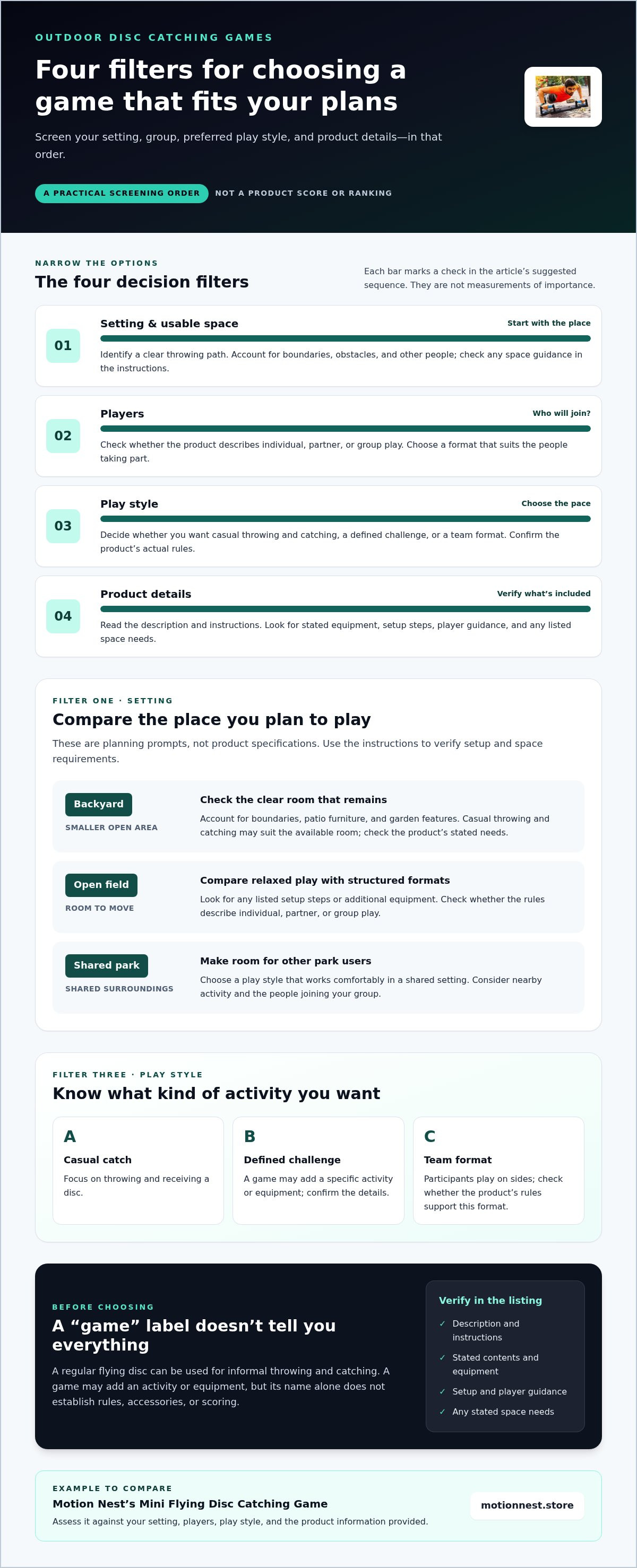
Start with three practical filters: the space you have, the people who’ll play, and the kind of activity you want. Casual catch calls for a different setup from a structured challenge. Thinking through these basics first helps you compare options without getting distracted by features that don’t fit your plans.
How a catching game differs from a regular flying disc
A regular flying disc can be used for informal throwing and catching. A game may add a defined activity or other equipment, but the details depend on the product. Read its description and instructions to understand how play works and what’s included. The word “game” alone doesn’t establish the rules, accessories, or scoring system.
Disc activities vary widely. The Disc sports overview describes forms such as ultimate, disc golf, and freestyle, illustrating how different activities can use a flying disc. That context doesn’t determine the rules or equipment for a particular catching game. For a buying decision, focus on the specific product information.
Who might enjoy this kind of outdoor activity?
This can suit people who enjoy throwing and catching outdoors. Picture the outing before choosing: are you looking for an easygoing way to pass time, or a game with a defined activity? Consider who will take part and what pace will feel enjoyable for the group. Then compare the product’s instructions with those preferences.
Space matters, but there’s no single area requirement for every format. Look at the actual place you expect to play. Identify the clear area for throwing and moving, then account for boundaries and nearby obstacles. A smaller open area may suit one activity, while another may need more room. Use the product’s guidance and rules to judge the fit.
Focus on the activity, not just the word “disc.” An outdoor disc catching game should match the players, setting, and style of play you have in mind. Once you know what you want, product descriptions and instructions are easier to compare.
Compare Outdoor Disc Catching Games by Space, Players, and Play Style
Use your setting and group to narrow the choices before comparing individual products. A backyard, an open field, and a shared park differ in available throwing space and surroundings. Group size and preferred pace matter, too. Choose a format that works comfortably in the place you plan to play rather than trying to make a small area fit an activity that needs more room.
| Setting | Group size | Setup needs | Play preference |
|---|---|---|---|
| Backyard or smaller open area | Check product instructions; group requirements vary. | Verify stated equipment and space needs. | Consider casual throwing and catching if that suits the available room. |
| Open field | Check whether the rules describe individual, partner, or group play. | Look for any listed setup steps or additional equipment. | Compare relaxed play with structured challenges or team formats. |
| Shared park | Choose based on the people joining and the product’s stated format. | Check setup instructions and account for other park users. | Prioritize a style that works comfortably in a shared setting. |
The right choice depends on your intended play and the usable space around you. Use the table as a planning aid, not as a source of product specifications. Check the instructions for player guidance, setup, and any stated space needs. Motion Nest’s Mini Flying Disc Catching Game is one option to compare against your plans by reviewing its product information.
Match the game to the outdoor space you have
Before choosing a spot, identify a clear throwing path and note nearby people, trees, fences, or other obstacles. In a backyard, check how much open room remains after accounting for boundaries, patio furniture, and garden features. An open field may offer more room to move, while a shared park calls for extra awareness of other visitors and nearby activity. Follow any space guidance in the product instructions.
Choose a play style that fits your group
Casual catch keeps the focus on throwing and receiving. A structured challenge adds a defined activity, while team play divides participants into sides. These are general formats, not claims about any particular product. If your group has mixed experience, look for clear instructions and a format that is easy to understand, then check the product’s actual rules before buying. The World Flying Disc Federation offers context on organized flying disc sports, though a recreational product’s instructions determine how that specific game is played.
Once you know your setting, group, and preferred pace, compare product descriptions for stated player guidance, setup, and space needs. Browse Motion Nest’s Outdoor Recreation section to explore options for outdoor activity.
Which Outdoor Disc Catching Game Details Matter Before You Buy?
A product name can suggest the general activity, but the listing and instructions tell you more about what to expect. Before choosing an outdoor disc catching game, look for a clear description, rules or setup guidance, and a written list of included items. These details help distinguish a packaged game from a regular flying disc and show whether the activity fits your plans.
Check what the listing and instructions actually tell you
Start with the product name and description, then read any available instructions. Check for stated materials, dimensions, components, and setup steps. Use these details as facts only when the product information provides them. Clear instructions also help you judge how much explanation the group may need before play.
Pay close attention to the contents. A product photo or broad description doesn’t necessarily mean every pictured item is included. Read the written contents to see what comes with the product, and use the instructions to learn how those items are used. For an example of a formal disc-sport format, compare the product’s own guidance with the linked UCCS resource on Ultimate Frisbee rules. Its format shouldn’t be assumed to apply to a different game.
Avoid common mismatches when choosing a game
A standard flying disc and a packaged game may offer different experiences. One may provide a disc for informal throwing and catching; another may describe a defined activity. Don’t choose by appearance alone. Check whether the stated play style suits the people joining, and don’t assume the product includes a target, scoring system, or extra equipment unless the listing or instructions say so.
Portability and storage are practical considerations, but they depend on the product. If you plan to carry a game to a park or store it between outings, look for stated dimensions or storage guidance. Don’t infer that a product is compact, lightweight, or easy to store without supporting details. Likewise, outdoor use alone doesn’t establish durability or weather resistance. Look for explicit product information about any feature that matters to your plans.
Before buying, check the product name, description, instructions, stated contents, setup guidance, and any portability or care details you need. This checklist keeps the decision grounded in information that matters to your use.
- Description: Does it explain the activity clearly?
- Instructions: Are the play and setup steps explained?
- Contents: Are included items stated in writing?
- Practical details: Are dimensions, storage, or care information provided where relevant?
Motion Nest’s Mini Flying Disc Catching Game is one option to consider as you compare product descriptions and instructions. Let the product information, rather than assumptions about similar games, guide your choice.
How to Choose an Outdoor Disc Catching Game for Your Plans
A quick plan makes it easier to choose an outdoor disc catching game that fits the outing, whether you’re heading to a park or stepping outside for an unplanned round. Decide what matters before browsing, then compare product information with your setting and group. This keeps the choice practical and helps you avoid assumptions about what a game includes or how it works.
Use a quick pre-purchase checklist
Jot down the location, who is likely to play, how much clear space you can use, and the kind of activity you want. Use these notes to compare options. Keep the product’s stated instructions and contents separate from general expectations about disc games.
- Choose the setting. Picture where you’ll play, such as a backyard, open field, or park. Consider the available open area and surroundings.
- Identify the players. Think about who is likely to join and whether the group prefers to take turns, play casually, or follow a defined activity. Don’t assume an age or ability level based on the product category alone.
- Select the play style. Decide whether you want informal throwing and catching or a more structured format. Use the product’s description and instructions to see what activity it supports.
- Check product facts. Read the stated contents and setup guidance. Look for details that matter to your plans, and don’t treat common features of similar games as facts about this one.
This order helps you narrow choices before you shop. For a spontaneous outing, start with the space and people available that day, then choose an activity whose instructions suit the moment. For a planned gathering, think ahead about the location and group, and use those details to guide your comparison.
Plan a comfortable and considerate play area
Choose an open area with room to throw and catch. Before starting, look for paths, other park users, pets, and nearby activity that could cross the play space. Move to a clearer spot or pause if the area becomes busy. A quick scan helps everyone share the space thoughtfully.
Follow the game’s instructions for setup and play, and respect local site rules. A park or shared outdoor area may have its own guidance, so take that into account when choosing where to play. If the instructions call for a particular setup or amount of space, follow that guidance. For informal play, keep the activity within the clear area available and adjust if people or obstacles move nearby.
Once your setting, players, and preferred activity are clear, compare those needs with the product details. Browse Outdoor Recreation to explore Motion Nest’s outdoor recreation section.
Explore Motion Nest's Mini Flying Disc Catching Game
Motion Nest’s Mini Flying Disc Catching Game is an option for shoppers considering an outdoor disc-catching activity. The product name identifies its category, but it doesn’t explain every detail of how it’s played or what comes with it. Use the product description and available instructions to set your expectations rather than relying on assumptions about similar games.
See whether the Mini Flying Disc Catching Game fits your plans
Think about where you expect to play, who may join, how much open space you have, and what kind of activity sounds enjoyable. Then compare those needs with the product information. Review stated details about play, setup, and contents to decide whether the game suits your outing.
- Setting: Consider whether your chosen spot has a suitable clear area.
- Players: Think about who will take part, without assuming an age range or player count.
- Play style: Use the described activity and instructions to understand what play involves.
- Product details: Base expectations about contents and setup on written information.
This is a straightforward way to evaluate the Mini Flying Disc Catching Game without assigning it features that aren’t stated. Don’t infer its rules from another disc game or assume an accessory is included because it appears in a similar product. If you’re comparing it with a regular flying disc, focus on the activity described for this product and the experience you want to share.
Browse outdoor recreation options
Review the product information alongside your plans. A good fit aligns with your setting and preferred play style, rather than a feature you assumed it had. Use the available product description and instructions to weigh the details that matter to your decision.
Motion Nest’s Mini Flying Disc Catching Game gives you an option to consider in this category. Keep your checklist nearby as you browse and compare it with your intended outing. You can explore outdoor recreation at your own pace.
Make Your Next Outdoor Game Easy to Plan
The best choice is one you can picture using in the place and company you have in mind. An informal afternoon may call for a different activity than a gathering with a set play format. Motion Nest’s Mini Flying Disc Catching Game is an option to consider as you decide what would make your outdoor time enjoyable.
Ready to take a closer look? Explore outdoor recreation and browse Motion Nest’s disc-catching game alongside other outdoor options. Motion Nest advertises worldwide shipping and a money-back guarantee. Review the product information as you browse, then choose based on the details that match your plans. A little preparation can make it easier to turn an open patch of outdoor space into time to play.
Frequently Asked Questions
What should I look for in an outdoor disc catching game?
Compare the activity format with the place and people you have in mind. Before a picnic, for example, check that the instructions are clear and that you have an open area suited to play. Review stated setup needs and contents. Treat dimensions, materials, or accessories as facts only when the product information says so. The right choice depends on how and where you plan to play.
Can you play a disc catching game in a small backyard?
A small backyard may work if its clear area suits the activity and its instructions. A narrow lawn beside a patio, for instance, may leave little room for a throw even if the yard feels open. Check whether people, windows, garden furniture, or fences sit close to the play path. Consider usable open space, not just the yard’s overall size, and follow any stated space guidance.
Is an outdoor disc catching game different from a flying disc?
A flying disc is an object; a catching game is an activity built around using one. Some games add a format or equipment, while informal catching can use a disc without a separate game structure. Rules and contents vary, so read the specific listing and instructions instead of assuming there’s a target, scorekeeping, or teams.
How many people do you need to play a disc catching game?
There’s no single player count for every disc-catching game. Follow the format described in the instructions. A listing may explain how participants take part, while another may leave group size open. For a small gathering, check whether the rules describe individual play or turns. For a larger group, look for guidance on roles or teams. Choose based on the people likely to join.
Can an outdoor disc catching game be played indoors?
Indoor play is appropriate only if the product guidance permits it and the room has clear space. A garage or community room may seem convenient, but furniture, glass, and people crossing through can create hazards. Keep throws away from fragile items and walkways, and don’t assume a game is indoor-ready based on its name. Read the instructions first. If they don’t address indoor use, choose an environment suited to the stated activity.
What should I check before buying a flying disc catching game online?
Before ordering online, verify that the page names the item you intend to buy and describes the activity clearly. Read the written contents and setup guidance, then compare them with what you need for your outing. Treat unstated dimensions, materials, age suitability, or weather performance as unknown, not implied by photos or category wording. This helps prevent expectation mismatches, such as planning around an accessory the listing never says is included.
How do you make disc-catching play safer outdoors?
Choose a space with a clear line for throwing and catching, then pause if people enter it. Scan for paths, pets, obstacles, and nearby park activity before play and as the area changes. Give other visitors room to pass, and follow the game’s instructions. A clear area lowers avoidable conflicts, but no setting is automatically hazard-free. If the surroundings become crowded or visibility is limited, wait or move to a more suitable open spot.